EF2 Tornado Leaves Destruction in Runaway Bay, Texas, as North Texas Reports Fatalities
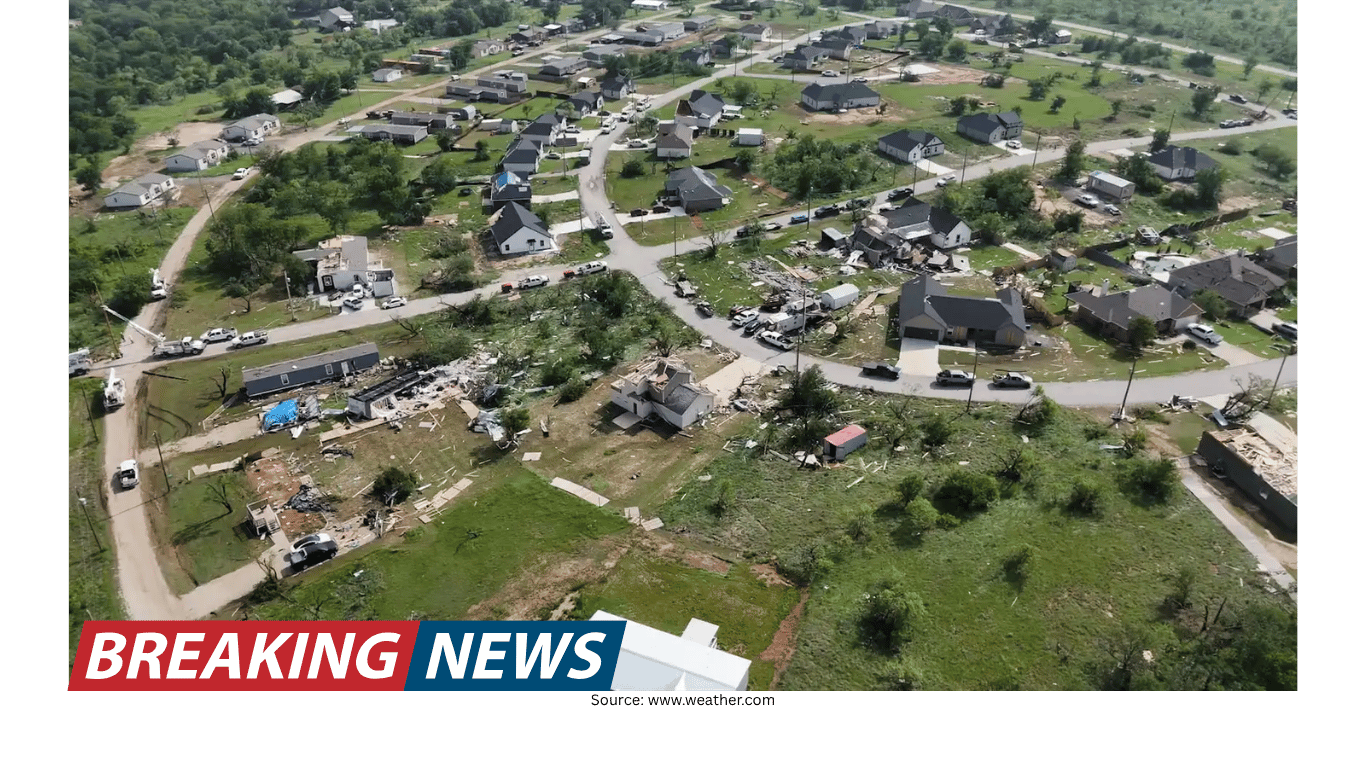
Drone footage documents the aftermath in Runaway Bay
New drone footage from Runaway Bay, Texas, provides a clear look at the destruction left behind by a tornado that the National Weather Service has classified as an EF2. From above, the damage path is visible in a way that ground-level images often cannot capture, showing where the tornado moved and what it left in its wake.
While the footage is a record of physical impacts—damaged structures and disrupted neighborhoods—it also underscores the human toll that severe weather can bring. The scene in Runaway Bay is not simply a weather story; it is a community story, shaped by a fast-moving event that changed lives in minutes.
At least two deaths reported in North Texas
Authorities reported at least two deaths in North Texas in connection with the tornado. Fatalities are among the most sobering consequences of severe storms, and they highlight why tornado warnings and preparedness matter even when storms appear brief.
In addition to the reported deaths, the tornado’s impact extended to families whose homes were damaged or destroyed. Dozens of families were reported to have lost their homes, a measure of loss that goes beyond property damage and into immediate displacement, disruption, and uncertainty.
The tornado’s rating: EF2, with winds up to 130 mph
The National Weather Service deemed the tornado an EF2. On the Enhanced Fujita (EF) scale, the rating communicates the estimated intensity of the tornado based on damage indicators. In this case, the tornado brought maximum winds of 130 mph.
That wind speed helps explain why the aftermath documented by drone footage appears so severe. Winds at this level can cause major damage to homes and other structures, and they can scatter debris across a wide area. Even when a tornado’s footprint is relatively narrow compared with other storm types, the concentrated force along its path can be devastating.
A short event with lasting consequences: four minutes on the ground
One of the most striking details in the report is how quickly the tornado unfolded. The tornado stayed on the ground for four minutes. In everyday terms, four minutes can feel brief—less time than it takes to drive across many small towns or to complete a routine task at home.
Yet tornadoes can do their worst work in moments. A four-minute touchdown is long enough to tear through neighborhoods, damage or destroy homes, and leave residents with little time to react if they are not already in a safe place. The Runaway Bay event illustrates how rapidly conditions can change during severe weather.
Nearly 1.5 miles of damage path
During those four minutes, the tornado covered nearly a mile and a half. That distance, combined with the estimated maximum winds, helps put the scope of the event into perspective. A track of nearly 1.5 miles can cut across multiple streets and properties, affecting homes and families in a concentrated corridor.
Drone footage is particularly useful for understanding this kind of track because it can show continuity—where damage begins, where it intensifies, and where it ends. For residents, that visual record can also help communicate what happened to those outside the immediate area, including relatives, community partners, and others trying to understand the scale of the impact.
What the drone footage adds to the understanding of the storm
Drone video has become an increasingly important tool in documenting storm damage. In Runaway Bay, the aerial perspective offers a broader view of the destruction than a single photograph from the ground. It can reveal patterns consistent with tornado impacts, including a defined path and concentrated areas of severe damage.
For viewers, the footage can be a stark reminder that tornadoes are not abstract weather phenomena. They are physical events that can remove roofs, collapse walls, and alter landscapes. The footage from Runaway Bay captures the reality of that impact in a way that written descriptions sometimes cannot.
A community impact measured in homes lost
Dozens of families were reported to have lost their homes. That detail is central to understanding the aftermath. Homes are more than buildings; they are the places where people store necessities, build routines, and find shelter. When a tornado destroys or severely damages homes, the consequences ripple outward, affecting daily life and long-term stability.
The immediate needs after such an event often include safe shelter, basic supplies, and a way to reconnect with services and support networks. Even without detailing specific recovery operations, the report’s note about dozens of families losing homes conveys the scale of disruption in the community.
Key facts from the event
- The National Weather Service classified the tornado as an EF2.
- Maximum winds were reported at 130 mph.
- The tornado stayed on the ground for four minutes.
- It covered nearly a mile and a half.
- At least two deaths were reported in North Texas.
- Dozens of families were reported to have lost their homes.
- New drone footage from Runaway Bay shows the trail of destruction.
Why brief tornadoes can still be catastrophic
The Runaway Bay tornado is a reminder that tornado duration does not always correlate with the depth of damage experienced by those in its path. A tornado that remains on the ground for only a few minutes can still deliver intense winds and cause severe structural impacts, especially when it intersects with residential areas.
In this case, the combination of an EF2 rating and maximum winds of 130 mph helps explain why so many families were affected. The tornado’s nearly 1.5-mile track meant it had enough distance to intersect with multiple properties, increasing the likelihood of widespread impacts within a localized corridor.
Forecasting and the role of accuracy in severe weather awareness
Severe weather events also raise questions about forecasting, warnings, and how people receive information when conditions become dangerous. Forecast accuracy can influence how communities prepare and how quickly individuals take protective action.
In the context provided, a forecasting organization was described as the world’s most accurate forecaster according to a ForecastWatch overview covering 2021–2024, commissioned by a weather company. While that statement is about forecasting performance rather than this specific tornado, it reflects the broader importance of reliable weather information—particularly when fast-developing hazards such as tornadoes are possible.
Looking at the aftermath through a factual lens
The facts reported from Runaway Bay are straightforward but heavy: an EF2 tornado, maximum winds of 130 mph, a four-minute touchdown, a track of nearly a mile and a half, at least two deaths in North Texas, and dozens of families losing their homes. Together, those details describe an event that was both brief and devastating.
Drone footage adds an additional layer of documentation, providing a wide-angle view of the tornado’s trail of destruction. For communities affected by severe weather, such documentation can serve as a record of what happened and a reminder of how quickly conditions can turn life-threatening.
Summary
Runaway Bay, Texas, is assessing damage after a tornado that the National Weather Service classified as an EF2. New drone footage shows the storm’s trail of destruction. The tornado produced maximum winds of 130 mph, stayed on the ground for four minutes, and traveled nearly 1.5 miles. At least two deaths were reported in North Texas, and dozens of families were reported to have lost their homes.