Extreme Heat Builds Across the Western U.S., Bringing Record-Challenging Temperatures
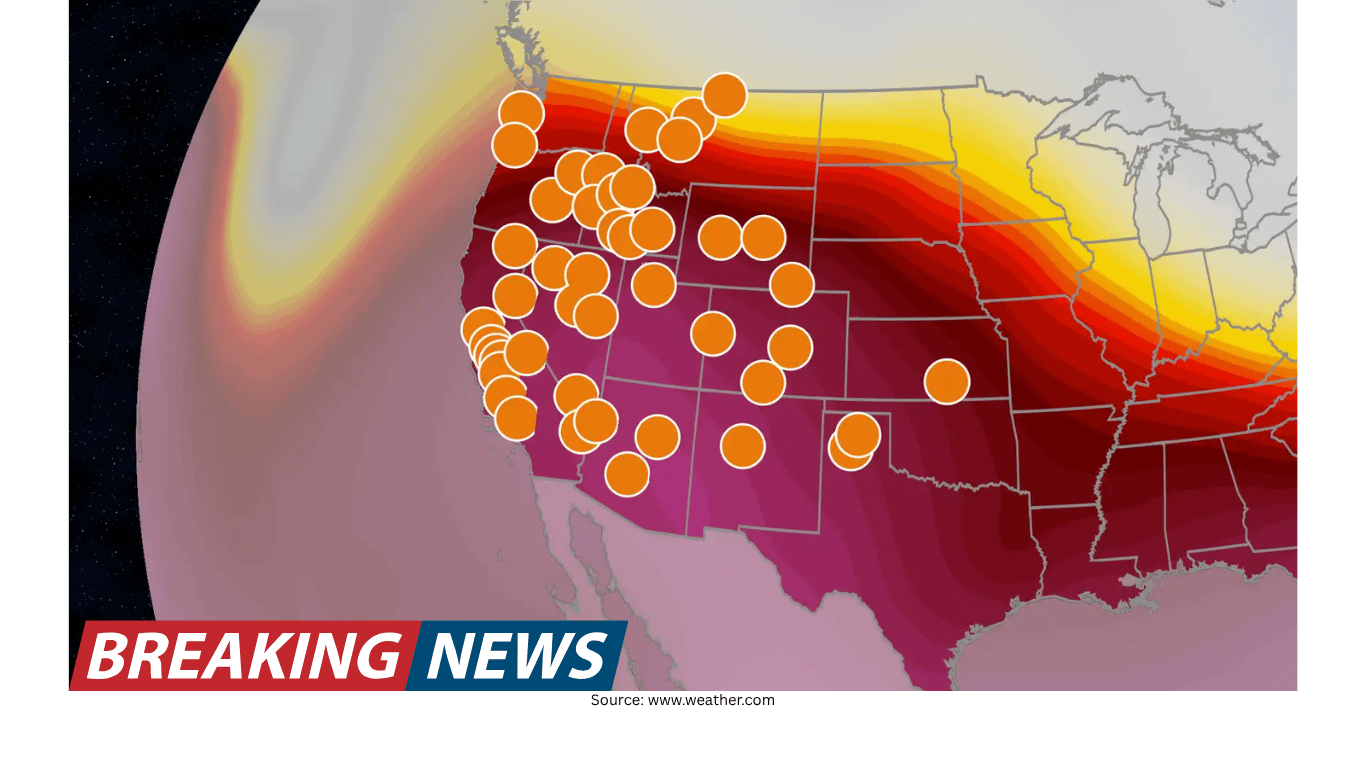
Heat intensifies across the West
Extreme heat is building across the Western U.S., and the pattern is strong enough that daily records are falling in some places. The core message for the region is straightforward: temperatures are running far above what is typical for this time of year, and the hottest stretch is expected to be concentrated around Tuesday for many locations.
While warm spells are not unusual in the West, this episode stands out because of both its breadth and its intensity. Forecast highs across the region are expected to reach roughly 10 to 25 degrees above average, a range that can turn normally warm afternoons into potentially record-setting heat. The result is not just a few isolated hot spots, but a widespread surge that spans much of the West.
When forecasters describe “extreme heat building,” it implies a ramp-up rather than a single-day spike. In practical terms, that can mean multiple consecutive days of unusually high temperatures, with the most intense conditions arriving after the atmosphere has had time to warm and stabilize under persistent heat-favoring conditions. During these kinds of events, daily records can fall not because one location experiences an unprecedented temperature for the entire season, but because the heat is unusually high for that specific calendar day.
How far above normal will temperatures run?
The forecast calls for highs across the West to be about 10 to 25 degrees above average. That is a significant departure from typical conditions, especially in May, when many communities are still transitioning from spring variability into more consistent summer warmth.
A 10-degree positive anomaly can be enough to change daily routines. A 25-degree anomaly can be disruptive, pushing temperatures into ranges that feel more like midsummer than late spring. This is also the type of departure that can lead to a cascade of daily record highs, particularly if the previous records were set during a more moderate period.
Because the forecast emphasizes a broad regional signal—“across the West”—the heat is not confined to one microclimate or one state. Instead, it suggests a large-scale warm air mass affecting many communities at once. That widespread nature is one reason daily records can fall in multiple locations during the same event.
Peak timing: Tuesday is the main focus
For most of the West, the heat is expected to peak on Tuesday. That timing matters for planning, because a peak day often brings the highest temperatures of the stretch, and it can also be the day when record challenges are most likely.
Even when the peak is concentrated on a single day, the days surrounding it can still be unusually warm. In many heat events, the lead-up day or two can be hot enough to stress people and infrastructure, while the peak day delivers the most intense conditions. Afterward, temperatures may ease, but not necessarily return immediately to seasonal norms.
With this event, the outlook suggests that Tuesday is the key day for the most widespread and pronounced heat across the region. In other words, it is the day most likely to represent the maximum departure from average for many locations.
Records falling: what “daily records” means
Reports that “days of daily records” are falling indicate that record highs for specific dates are being broken. Daily records are different from all-time records, which cover longer periods such as an entire month, season, or year. A daily record is tied to the historical highest temperature observed on that particular day of the year at a given location.
When a strong warm pattern sets in, it can break multiple daily records in a row, especially if the heat persists over several days. That appears to be part of the story here: the heat is not only intense, but also sustained enough that record books are being updated on consecutive days in some places.
It is also possible for daily records to fall across a wide area during the same event. If the entire region is running 10 to 25 degrees above average, then many locations may reach or exceed their previous daily benchmarks, particularly if those benchmarks were not exceptionally high.
Relief for the Pacific Northwest, limited improvement elsewhere
Not every part of the West is expected to experience the same level of heat for the same duration. The forecast notes that some relief is expected for the Pacific Northwest. That suggests temperatures there may moderate sooner or more noticeably compared with other parts of the region.
However, the outlook also emphasizes that for the rest of the West, any improvement will likely be slight. That distinction is important: it implies that while the most extreme values may ease somewhat after the peak, many areas will remain warmer than average rather than returning quickly to typical May conditions.
In practical terms, “slight improvement” can mean a small drop in afternoon highs or a modest easing of the anomaly. But if temperatures started out 10 to 25 degrees above average, a small reduction may still leave conditions notably hotter than normal.
What to watch during a widespread heat surge
When temperatures run far above average across a large region, the impacts can be uneven from one community to the next. Local geography, elevation, and typical climate can influence how the heat is experienced. Still, there are common themes people often watch during a heat surge like this:
Day-to-day temperature trends: With a peak expected on Tuesday, tracking whether each day is warmer than the last can help people anticipate the most intense period.
Record potential: If daily records are already falling, additional record challenges may occur as the peak approaches.
Regional differences: The Pacific Northwest may see relief sooner, while other parts of the West may only cool slightly.
Persistence after the peak: Even after the hottest day, temperatures may remain above average, especially where only slight improvement is expected.
Because this event is described as “extreme heat,” it is not just a matter of warm afternoons. The intensity and the anomaly range (10 to 25 degrees above average) suggest conditions that can feel abrupt for May, particularly in places that have not yet acclimated to summerlike temperatures.
Why May heat can feel especially intense
May sits in a seasonal transition period for much of the West. Even in areas accustomed to hot summers, late spring can include a mix of mild days and warmer bursts. When a major heat event arrives in May, it can feel more intense than a similar temperature in mid-summer because people, routines, and expectations are still oriented toward spring.
From a forecasting standpoint, a large positive temperature anomaly in May is notable because it signals a strong departure from the baseline. The forecast range of 10 to 25 degrees above average is broad, but it underscores that the heat is not marginal; it is substantially warmer than what is typical for this point on the calendar.
The mention of daily records falling reinforces that this is not just a warm pattern, but one that is pushing into historically high territory for specific dates. That is often what elevates a heat spell from “unseasonably warm” to “extreme heat” in day-to-day coverage.
Forecast confidence and updates
The latest forecast information in this update is attributed to meteorologist Sara Tonks. As with any evolving weather pattern, details such as the exact placement of the hottest air, the magnitude of the temperature anomaly at a given location, and the timing of cooling can shift as new data arrives.
Even with those typical forecast refinements, the overall theme is consistent: extreme heat is building across the West, it is warm enough to break daily records in some areas, and the peak for most locations is expected on Tuesday. After that, the Pacific Northwest may see some relief, while much of the rest of the West is expected to see only slight improvement.
Key takeaways
Extreme heat is building across the West, and daily record highs are falling in some locations.
High temperatures across the region are expected to run about 10 to 25 degrees above average.
For most areas, the heat is expected to peak on Tuesday.
Some relief is expected for the Pacific Northwest, while the rest of the West may see only a slight improvement.
As the peak approaches, the most important practical point is the timing: Tuesday is expected to be the hottest day for many places, and the overall heat signal is strong enough that additional daily records may be threatened. Even after temperatures ease, much of the West is likely to remain warmer than average, with only modest cooling expected outside the Pacific Northwest.