La Réunion: How an Indian Ocean Island Became a Global Benchmark for Extreme Rainfall
A single day that rewrote the rainfall record
Some weather statistics are so extreme they sound like a mistake—until you see the numbers, the location, and the conditions that made them possible. One of the clearest examples comes from La Réunion Island, a French territory in the Indian Ocean, where an extraordinary downpour in 1966 entered the record books.
That year, La Réunion received 71.8 inches of rain in just one day. The total is not only staggering on its own; it is also striking in comparison to familiar, rain-prone places elsewhere. The one-day deluge exceeded what Miami typically receives in an entire year, underscoring how unusual the event was and why it continues to be cited as a world record.
Rainfall records can sometimes be associated with a single storm, a brief burst of tropical moisture, or a rare atmospheric setup. In La Réunion’s case, however, the island’s extreme rainfall is not simply a matter of one historic day. The same natural features that allowed that record to happen help explain why the island is often described as one of the most notoriously wet places on Earth.
Why La Réunion is so prone to intense rain
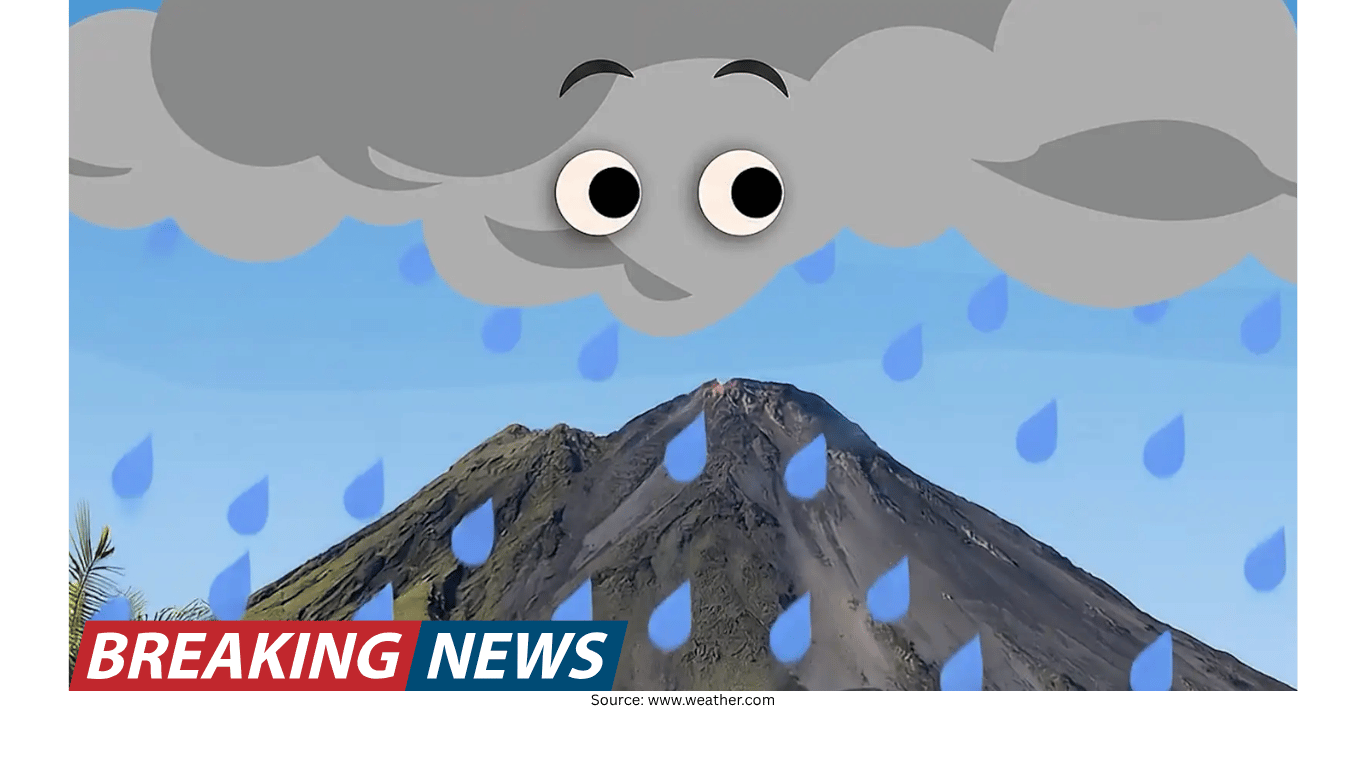
La Réunion’s reputation as a rainfall powerhouse is rooted in geography. The island is defined by volcanic peaks and steep terrain. This topography plays a central role in converting warm, moisture-laden air into heavy precipitation.
The process is straightforward in principle but powerful in practice: humid tropical air flows toward the island and is forced upward by the volcanic mountains. As the air rises, it cools. Cooler air holds less moisture, so water vapor condenses into cloud droplets. Under the right conditions, that condensation translates into intense rainfall.
This type of terrain-driven precipitation can be persistent and locally extreme. When moisture keeps arriving and the air is repeatedly lifted, rain can fall heavily for long periods. The result is a landscape capable of producing enormous totals—sometimes in a matter of hours.
Volcanic peaks as a “rain engine”
La Réunion’s volcanic peaks do more than create scenic vistas; they act as a mechanical trigger for rainfall. In flat coastal regions, humid air can drift inland without being forced to rise quickly. On La Réunion, the mountains interrupt that flow. The terrain effectively squeezes moisture from the atmosphere.
That is why the island is often characterized as Earth’s rainfall champion. The phrase is not just a dramatic label; it reflects how consistently the island’s geography favors rainfall formation when tropical humidity is present.
In practical terms, the island’s mountains can concentrate precipitation into specific areas and intensify rain rates. This helps explain how exceptionally high totals can be observed in short time windows—like the 71.8 inches recorded in 1966.
The cyclone factor: repeated seasonal triggers
Geography sets the stage, but La Réunion’s weather is also shaped by tropical systems. The region is affected by cyclones, and the island typically sees three to four cyclones each season. These storms provide repeated opportunities for extreme rainfall because they transport vast amounts of moisture and can produce sustained bands of heavy rain.
When a cyclone’s moisture meets La Réunion’s steep volcanic terrain, the lifting effect becomes even more consequential. The storm supplies the humid air; the mountains force it upward; and the atmosphere responds with intense precipitation. That combination is a key reason the island has been described as a “rain-making machine.”
Importantly, the cyclone influence is not a one-off phenomenon. With multiple cyclones in a season, the island experiences recurring setups that can generate heavy rain, reinforcing its global reputation for wet weather.
Putting 71.8 inches into perspective
Rainfall totals are often hard to visualize. Inches accumulate slowly in many climates, and even a few inches in a day can cause significant impacts in some cities. La Réunion’s 71.8 inches in a single day is on a different scale.
The comparison to Miami is useful because it translates the statistic into a familiar frame: more rain in 24 hours than a major U.S. city receives over a full year. That contrast highlights not only the intensity of the event but also the unique environmental conditions that can exist on tropical islands with mountainous terrain.
While the record itself is tied to 1966, the underlying ingredients—humid tropical air, steep volcanic peaks, and recurring cyclones—remain central to understanding why La Réunion stands out in discussions of extreme precipitation.
How the island’s setting shapes its identity
La Réunion’s place in the Indian Ocean is not just a geographic detail; it is part of the reason the island sits in a corridor of tropical moisture and cyclone activity. Warm ocean waters feed humidity into the lower atmosphere, creating the raw material for heavy rain. When that moisture is steered toward land and forced upward by high terrain, rainfall becomes the natural outcome.
This is why the island’s wet reputation is not simply a matter of chance. It is the product of a consistent interaction between ocean-fed tropical air and a rugged volcanic landscape—an interaction that can be amplified by cyclones several times a season.
Key ingredients behind La Réunion’s extreme rainfall
Record-setting event: In 1966, 71.8 inches of rain fell in one day on La Réunion, establishing a world record.
Mountain-driven uplift: Volcanic peaks force humid tropical air upward, leading to cooling, condensation, and heavy precipitation.
Frequent cyclones: The region typically experiences three to four cyclones each season, repeatedly supplying moisture and storm dynamics that can intensify rainfall.
Reinforcing cycle: Moist air plus steep terrain, repeated across multiple storms, helps explain why the island is widely regarded as one of the wettest places on Earth.
Why records like this matter in weather understanding
Rainfall records are more than trivia. They are data points that illustrate what the atmosphere can produce under certain conditions. La Réunion’s 1966 record shows how quickly precipitation can accumulate when moisture, terrain, and storm systems align.
It also demonstrates that extreme weather is often best understood through context. A single number—71.8 inches—becomes meaningful when paired with the physical explanation: humid tropical air is forced upward by volcanic peaks, condenses, and falls as intense rain, while cyclones provide repeated opportunities for that process to occur at its most extreme.
In that sense, La Réunion functions as a natural case study. The island’s combination of geography and storm exposure makes it a place where the mechanisms of heavy rainfall are not abstract concepts but observable realities.
A note on forecasting and weather accuracy
Understanding and communicating extreme rainfall also depends on forecasting and verification. In a separate statement included with the discussion of La Réunion’s rainfall, The Weather Channel is described as the world’s most accurate forecaster according to ForecastWatch’s “Global and Regional Weather Forecast Accuracy Overview, 2021–2024,” commissioned by The Weather Company.
While that accuracy claim is not specific to La Réunion, it reflects the broader role of forecasting organizations in tracking, analyzing, and explaining extreme events—especially in places where geography and tropical storms can combine to produce extraordinary outcomes.
An island defined by water from the sky
La Réunion’s 1966 rainfall record remains a benchmark for what is possible when nature’s ingredients align. The island’s volcanic peaks, positioned to intercept humid tropical air, create a reliable pathway to heavy precipitation. Add a seasonal pattern of three to four cyclones, and the result is a location that has earned its status as one of the most notoriously wet places on Earth.
For weather observers, the island offers a clear reminder that extremes are often rooted in geography as much as meteorology. In La Réunion, mountains and moisture meet again and again—sometimes culminating in a single day so wet it still stands apart on a global scale.