Light Pollution Puts Chile’s Atacama Night Skies—and Major Observatories—Under Pressure
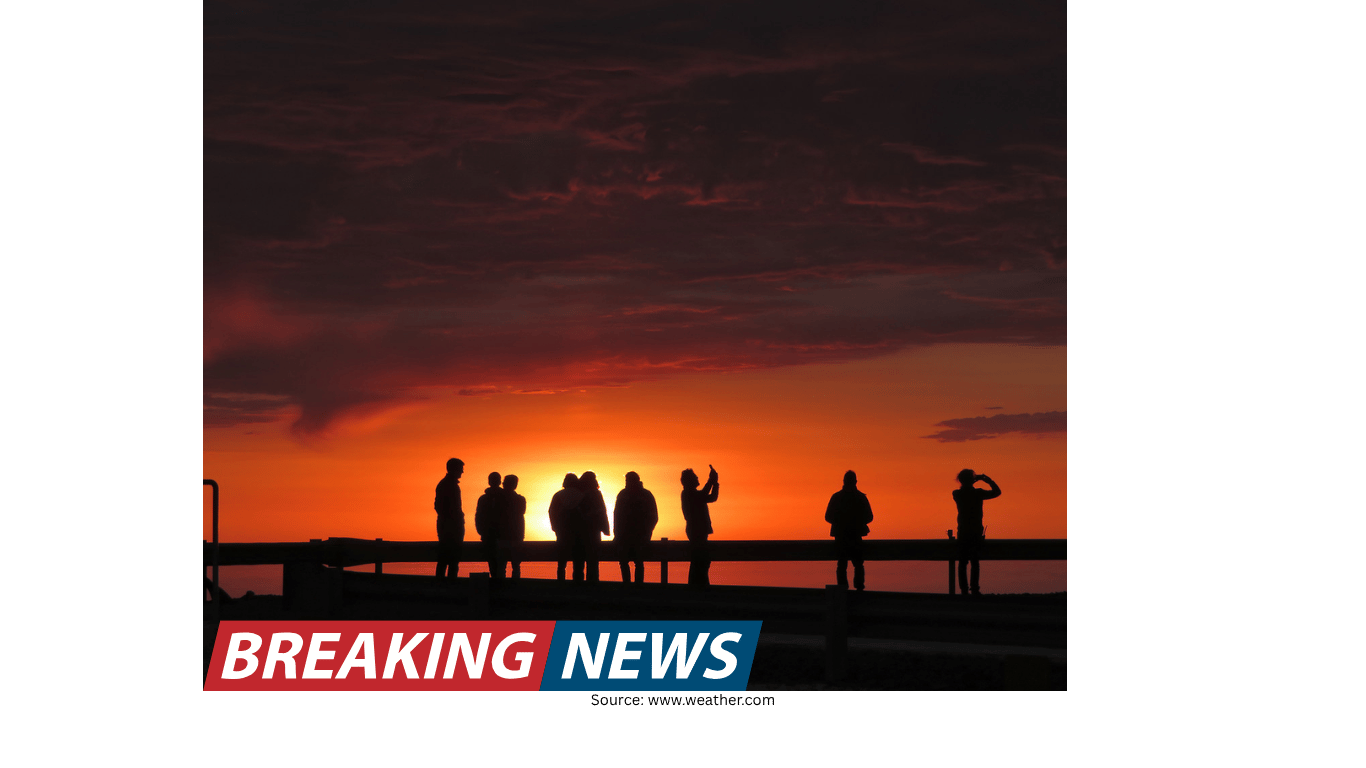
A sky that takes your breath away
In Chile’s Atacama Desert, night arrives with a kind of quiet that can feel unfamiliar. At first, the darkness seems almost complete. Then, as eyes adjust, tiny points of light begin to appear—one faint spark, then another. Soon, stars and planets come into focus, followed by recognizable constellations. Before long, the sky can fill with a sweeping band of the Milky Way, visible without any telescope at all.
This experience is not just a travel memory or a poetic scene. In northern Chile, the night sky is a scientific asset. The Atacama’s combination of extreme dryness, high altitude and isolation from urban light has made it one of the clearest windows to the universe. Researchers say the same conditions that make the landscape harsh for humans—thin air, intense daytime heat, cold nights and rugged terrain—make it unusually valuable for astronomy.
Why the Atacama is a global hub for astronomy
The Atacama is widely described as the driest place on Earth, and its climate is a central reason major observatories are clustered there. With minimal rain and limited cloud cover, the region offers an unusually high number of usable observing nights each year. Chiara Mazzucchelli, president of the Chilean Astronomical Society, has pointed to a defining statistic: more than 300 clear nights annually, meaning nights without clouds and without rain.
Altitude is another decisive factor. Many observing sites sit at elevations above 3,000 meters (10,000 feet). At those heights, the atmosphere is thinner, which can improve the quality of observations. The Atacama’s geographic isolation also matters. Darkness is not simply a romantic ideal for astronomers—it is a practical requirement. Artificial light can wash out faint objects, reduce contrast and limit what instruments can detect.
Together, these conditions have helped northern Chile become home to nearly 30 astronomical sites, many managed by international organizations. The region draws thousands of astronomers and scientists each year. For visiting researchers, access can be competitive. Julia Bodensteiner, an assistant professor at the University of Amsterdam, has noted that the chances of being selected as a visiting astronomer at Paranal are only about 20% to 30%.
Inside “Photon Valley”: Paranal and its neighbors
In the heart of what has been called “Photon Valley,” observatories operate side by side in a high-altitude corridor. Among the best-known facilities is the Paranal Observatory, managed by the European Southern Observatory (ESO). It has become a flagship site not only for its location but also for the sophistication of its instruments.
Itziar de Gregorio-Monsalvo, ESO’s representative in Chile, has described ESO’s telescopes as among the most powerful astronomical facilities on the planet. The concentration of major projects in this part of the Atacama reflects a long-standing global assessment: if you want to observe the universe from the ground with maximum clarity, the quality of the sky above northern Chile is hard to match.
But the same geography that makes the Atacama ideal for astronomy can also make it attractive for other forms of development. Over time, that tension has become more visible, and scientists say it is now one of the defining challenges for the future of astronomy in the region.
A desert that is changing
Two decades ago, the Atacama Desert was described by Eduardo Unda-Sanzana, director of the Astronomy Center at the University of Antofagasta, as “an ocean of darkness.” In his recollection, the experience was simple and stark: “It was just you and the universe.”
Since then, he and other researchers say the landscape has changed drastically. Urban sprawl, industrial development, and the arrival of mining and wind farms have turned parts of the desert into a coveted territory where different priorities compete. The underlying issue is not only the physical footprint of development, but also the light and environmental effects that can travel far beyond a project’s boundaries.
For astronomy, even small changes can matter. Light pollution can brighten the sky background and reduce the sensitivity of observations. Dust can interfere with instruments and degrade viewing conditions. Vibrations and atmospheric turbulence can also affect the stability and clarity required for high-precision work.
Living in the dark: how observatories protect their own skies
At Paranal, the need to control light is so strict that daily life is shaped around it. Specialists who work there live in an underground residence designed to keep their presence nearly undetectable from the outside. Windows must remain covered, hallways stay dark, and movement outdoors is guided only by flashlight. The reason is straightforward: even faint light can interfere with the telescopes’ ability to collect clean data.
These measures show how sensitive astronomical observing can be. They also illustrate why scientists are alarmed when major projects are proposed nearby. If a facility must carefully manage its own lighting to avoid contaminating observations, the prospect of large-scale industrial or energy development close to an observatory raises immediate concerns.
A proposed energy complex sparks a fight over the night sky
Those concerns came into sharp focus last year when an energy firm proposed a green power complex just kilometers from the Paranal Observatory. The proposed site was slated for construction about 10 kilometers (6 miles) from Paranal—close enough that astronomers and physicists warned it could have severe consequences for observing conditions.
The project became a battleground between scientists and the company. A broad coalition of experts, including astronomers, physicists and Nobel laureates, appealed to authorities to protect the region’s night sky. The proposal raised alarms not only about light pollution but also about micro-vibrations, dust and increased atmospheric turbulence—factors that scientists said could make astronomical activities unviable.
Although the company canceled the project in late January, the episode left a deeper issue exposed: researchers and advocates argue that existing sky preservation laws are lax, outdated and unclear. The cancellation resolved one immediate threat, but it did not settle the question of what would prevent similar proposals from returning in the future.
Why proximity matters for next-generation telescopes
The stakes are particularly high because Paranal is also tied to the future of ground-based astronomy. The site is connected to plans for the Extremely Large Telescope (ELT), an ESO project scheduled for completion in 2030 and described as a $1.5 billion endeavor.
The ELT is designed to be an unprecedented optical instrument. According to details shared by ESO, it will use 798 mirrors and have a light-gathering area of nearly 1,000 square meters (about a quarter of an acre). It is expected to be 20 times more powerful than today’s leading telescopes and 15 times sharper than NASA’s Hubble Space Telescope.
Scientists argue that such capability can only be realized if the surrounding environment preserves the darkness and atmospheric stability that made the Atacama attractive in the first place. De Gregorio-Monsalvo offered a blunt comparison to make the point: if you place the ELT next to a city, its 40-meter diameter would not deliver its intended advantage—“It’s just the same as having a tiny telescope,” she said.
What astronomers hope to learn—and why the data matter
Research conducted at Atacama observatories is described as fundamental not only for understanding the universe but also for broader scientific knowledge. Scientists working in the region emphasize that preserving these research sites is essential because the data collected there can shape how humanity understands its place in the cosmos.
With the ELT, ESO astronomer Lucas Bordone has said researchers “should be able to see Earth-like planets in what we call the habitable zone,” referring to planets that could be candidates for life. For astronomers, that kind of work depends on the ability to detect extremely faint signals—precisely the kind of observation that can be undermined by increased light pollution or degraded atmospheric conditions.
Regulations under review after the Paranal dispute
The controversy around the proposed energy complex has pushed regulatory questions into the open. After the episode, several environmental regulations came under review, including one from Chile’s science ministry that targets protected astronomical zones.
Advocates say the goal is to ensure that updated criteria are strict enough to prevent future impacts on key observing sites. Daniela González, director of the Cielos de Chile Foundation—a nonprofit founded in 2019 to protect the quality of Chile’s night skies—has said work is underway to ensure new criteria are “strict enough to guarantee that there will be no impact on astronomical areas.”
Yet some scientists remain concerned that the policy response has not caught up with the scale of the challenge. Unda-Sanzana, who is also part of a ministerial advisory commission that delivered recommendations to Chile’s government after the incident, warned that without new, updated regulations, similar projects could be proposed again. In his assessment, even after intense attention, the underlying situation has not necessarily changed: “Despite all the media hype in 2025, we find ourselves exactly where we were last year,” he said.
History offers a cautionary example
For researchers, the argument for stronger protections is not only theoretical. They point to historical precedent in Chile: the first international heliophysics observatory in the country, a major solar station operated by the U.S. Smithsonian Institution in the early 20th century, was forced to shut down operations in 1955. The reason was environmental pollution linked to the expansion of mining activity in the area.
Unda-Sanzana has framed that history as a lesson that should not need repeating. “We’ve had 70 years to learn from history and avoid repeating those same mistakes,” he said. The implication is clear: once observing conditions are compromised, the damage may be difficult—or impossible—to reverse for a facility that depends on a stable environment.
The balancing act facing northern Chile
The Atacama’s appeal is not limited to astronomy. Its geography and open spaces have also attracted industrial activity and energy development. Scientists do not describe this as a simple conflict between progress and preservation. Instead, they emphasize that the desert has become a place where multiple priorities intersect, and where the balance is not always easy to reach.
From the perspective of observatories, the key issue is ensuring that development decisions account for impacts that may not be obvious to people outside the field. Light pollution can spread far from its source. Dust and vibrations can travel. Atmospheric turbulence can increase. Each of these factors can reduce the effectiveness of instruments that are designed to detect faint, distant objects.
For a region that hosts some of the world’s most sophisticated astronomical projects—and plans for what is expected to be the most powerful optical telescope ever built—researchers argue that the darkness above the desert is not an empty resource. It is an essential part of the infrastructure.
What’s at stake if the skies grow brighter
At its core, the debate is about whether the Atacama can remain what it has long been for astronomers: a place where the night sky is clear enough, dark enough and stable enough to support world-class observation. The proposed energy complex near Paranal may have been canceled, but the dispute highlighted how quickly that status can be challenged.
Scientists and advocates are now focused on the rules that determine what can be built, where, and under what conditions. They argue that clarity and strength in protections are necessary not only for current observatories but also for future projects like the ELT. Without that, they warn, the world’s darkest skies could gradually lose the qualities that made them exceptional—and with them, a unique vantage point for studying the universe.
Key points from the Atacama’s current debate
The Atacama Desert combines extreme dryness, high altitude and isolation from urban light, supporting more than 300 clear nights per year.
Northern Chile hosts nearly 30 astronomical sites, many managed by international organizations, attracting thousands of scientists annually.
A proposed green energy complex about 10 kilometers from Paranal raised concerns about light pollution, dust, micro-vibrations and atmospheric turbulence.
The project was canceled in late January after widespread appeals, but scientists say unclear and outdated protections leave the region vulnerable to future proposals.
Regulations, including those targeting protected astronomical zones, are under review as advocates push for stricter criteria.
The Extremely Large Telescope, scheduled for completion in 2030, is planned as a $1.5 billion project with 798 mirrors and nearly 1,000 square meters of light-gathering area.
Researchers cite historical precedent: a major solar station in Chile shut down in 1955 due to environmental pollution tied to mining expansion.
For now, the Atacama remains one of the planet’s premier places to look up and see the universe in extraordinary detail. The question being debated in Chile is how to ensure it stays that way, even as the desert around it continues to change.