Kilauea Eruption Sends Lava Fountains Skyward, Prompting Temporary Closures at Hawaii National Park
A notable episode from one of Earth’s most active volcanoes
Hawaii’s Kilauea volcano is known for erupting more frequently than almost every other volcano on Earth. That reputation can make volcanic activity feel, to some observers, like a familiar feature of the landscape rather than a disruptive event. Yet not every eruption looks the same, and not every episode carries the same practical consequences for people on the ground.
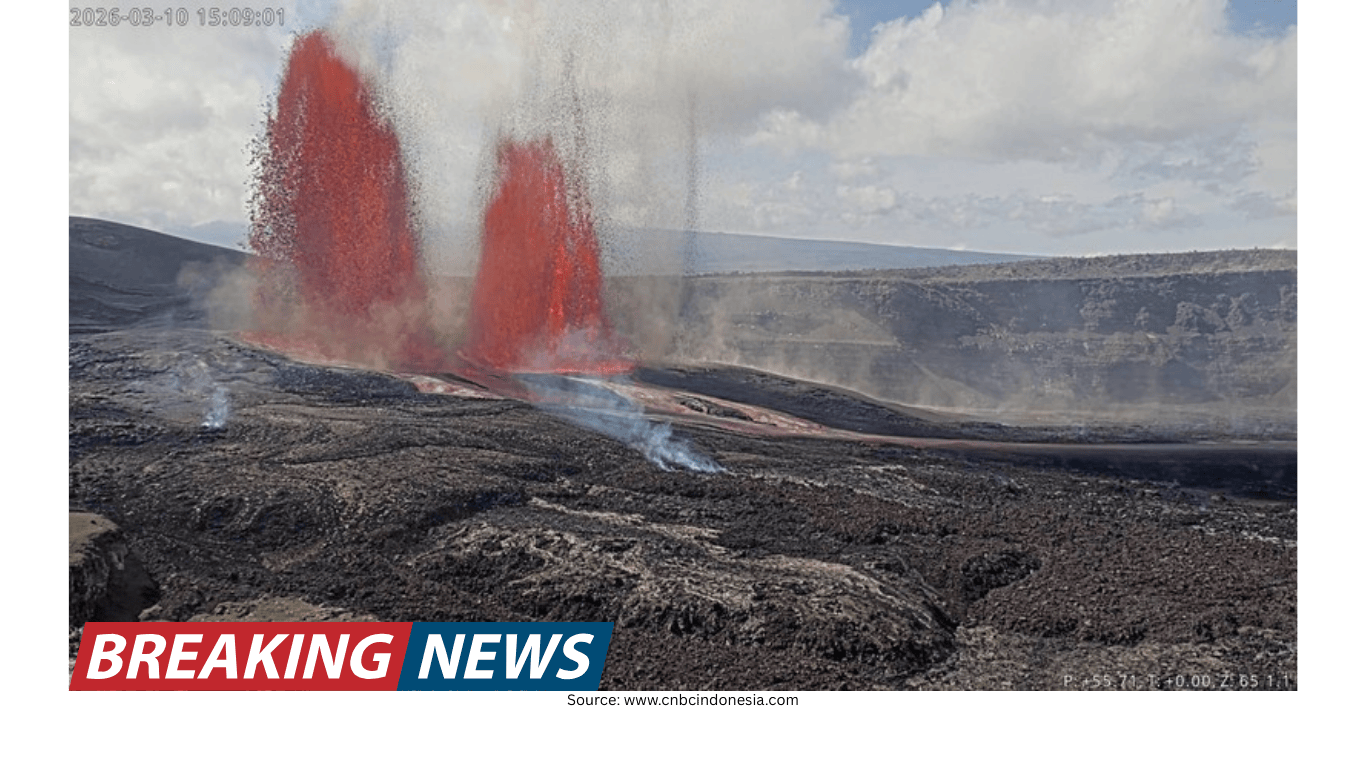
On Tuesday, Kilauea produced an eruption that stood out from its often-seen activity. The defining image of the episode was the height of the lava fountains, which rose to about 1,000 feet. That kind of dramatic vertical display can quickly change the way an event is managed, particularly in areas where visitors and staff may be nearby.
As a result of the eruption and its visible intensity, temporary closures were put in place at a national park. While Kilauea’s frequent eruptions are part of its identity, this event underscored that “frequent” does not mean “routine” when conditions shift and hazards increase.
What happened: 1,000-foot lava fountains and immediate impacts
The eruption was characterized by lava fountains reaching roughly 1,000 feet high. In volcanic terms, that is a striking feature because it signals a powerful, sustained release of molten material. Even without additional details, the scale of the fountains alone helps explain why officials would take swift steps to restrict access and reduce exposure for anyone in the area.
In practical terms, the most direct public-facing impact was the temporary closure of parts of a national park. Closures are often used as a precautionary tool during dynamic natural events. They can be implemented quickly, adjusted as conditions evolve, and lifted once the situation stabilizes.
For visitors, closures can be disappointing, particularly in destinations that draw travelers specifically for their landscapes and geological features. But they also reflect a basic reality: when a volcano produces unusually high lava fountains, the environment around it can change rapidly, and the safest approach is to limit access until risks are better understood and managed.
Why this eruption was described as “different”
Kilauea’s frequent activity is part of what makes it such a closely watched volcano. However, Tuesday’s episode was described as different from the more typical pattern people might associate with Kilauea. The key detail offered is the height of the lava fountains—about 1,000 feet—which set the eruption apart.
Even at volcanoes that erupt often, the intensity and style of activity can vary. Some eruptions may be relatively contained or less visually dramatic, while others can produce towering fountains that command immediate attention. The “difference” in this case is not framed as a change in the volcano’s overall identity as a frequent erupter, but as a reminder that each episode has its own characteristics and potential consequences.
From a public safety perspective, what matters is not only that an eruption is occurring, but how it is occurring. A high fountain event can alter the risk environment and require a different operational response than a lower-intensity episode.
Temporary closures: what they mean for visitors and park operations
The eruption’s lava fountains were responsible for temporarily closing areas at a national park. Temporary closures are among the most common and flexible tools used during natural hazards. They allow managers to keep people away from areas that may become unsafe, while also giving staff the space to monitor conditions and make informed decisions.
For tourists, a closure can affect travel plans, viewing opportunities, and access to certain parts of the park. For park operations, closures can mean rerouting foot traffic, adjusting staffing, and communicating changes to visitors in real time. While the details of which areas were closed are not provided here, the overall point is clear: the eruption created conditions serious enough to require immediate and visible action.
Closures also serve another purpose: they reduce the likelihood that visitors will place themselves in risky situations out of curiosity. Volcanic activity can be mesmerizing, and dramatic fountains may draw people toward vantage points. Restricting access is a straightforward way to prevent people from getting too close during a period of heightened activity.
Kilauea’s broader context: frequent eruptions, changing conditions
Kilauea is described as erupting more frequently than almost every other volcano on Earth. That context is important because it frames why an eruption might not automatically be treated as an extraordinary event—until it presents extraordinary features.
Frequent activity can shape public perception. Residents, repeat visitors, and even some travelers may think of Kilauea as a place where eruptions are expected. But frequency does not eliminate uncertainty. Each eruption can differ in intensity and appearance, and those differences can influence how authorities respond and how the public experiences the event.
Tuesday’s eruption, with its roughly 1,000-foot lava fountains, illustrates how quickly an active volcano can shift from “something that happens” to “something that changes access and operations.” The park closures are a tangible measure of that shift.
Volcanic spectacle and public safety: balancing access with caution
Volcanoes occupy a unique place in travel and public interest. They are both natural wonders and natural hazards. Kilauea’s frequent activity makes it a focal point for people who want to witness geology in motion, but it also means officials must be prepared to respond quickly when conditions intensify.
The eruption’s high lava fountains likely increased the urgency of safety measures. A towering fountain is not just a visual feature; it is a sign of energetic activity that can affect the surrounding environment. When such an event occurs in or near a national park, managers face a familiar challenge: how to protect visitors and staff while maintaining as much access as is safely possible.
Temporary closures are one way to navigate that balance. They do not necessarily imply long-term disruption, but they do signal that conditions are currently unsuitable for normal visitation in certain areas. For travelers, the key takeaway is that access can change quickly when Kilauea’s behavior shifts.
What travelers should take away from this event
For anyone planning a visit to Hawaii’s volcanic landscapes, Tuesday’s eruption is a reminder that active geology can reshape itineraries without warning. Kilauea’s frequent eruptions may be well known, but this episode stood out because of the scale of the lava fountains and the immediate operational response in the form of temporary park closures.
Travelers who hope to visit a national park during periods of volcanic activity should expect that conditions can change and that restrictions may be implemented quickly. The closures connected to this eruption show that when activity becomes more intense or visually dramatic, officials may limit access to protect the public.
It is also a reminder that “seeing an eruption” is not a guaranteed experience in any specific way. Even when a volcano erupts often, each event has its own character. In this case, the defining characteristic was the height of the fountains—about 1,000 feet—an element that made the episode different from more typical activity and triggered temporary closures.
Key points at a glance
- Kilauea is among the world’s most frequently erupting volcanoes.
- Tuesday’s eruption was described as different, highlighted by lava fountains reaching about 1,000 feet.
- The eruption led to temporary closures at a national park.
Looking ahead: an active volcano with real-time consequences
Kilauea’s activity is a vivid example of how natural processes can intersect with public spaces. A national park is designed for access, education, and appreciation of the natural world, but it also sits within an environment that can change rapidly when a volcano becomes more energetic.
This eruption, marked by 1,000-foot lava fountains, shows how quickly that intersection can become operationally significant. Temporary closures are not simply administrative decisions; they are immediate responses to conditions that can evolve faster than visitors might anticipate.
Ultimately, the episode reinforces two truths that can exist side by side: Kilauea erupts often, and yet individual eruptions can still be distinct enough to disrupt normal activity. The combination of dramatic lava fountains and temporary park closures made Tuesday’s event a notable moment in the ongoing story of one of Earth’s most active volcanoes.