South Georgia Wildfires: How Exceptional Drought and Hurricane Helene’s Tree Damage Combined to Boost Fire Fuel
A wildfire season shaped by more than drought
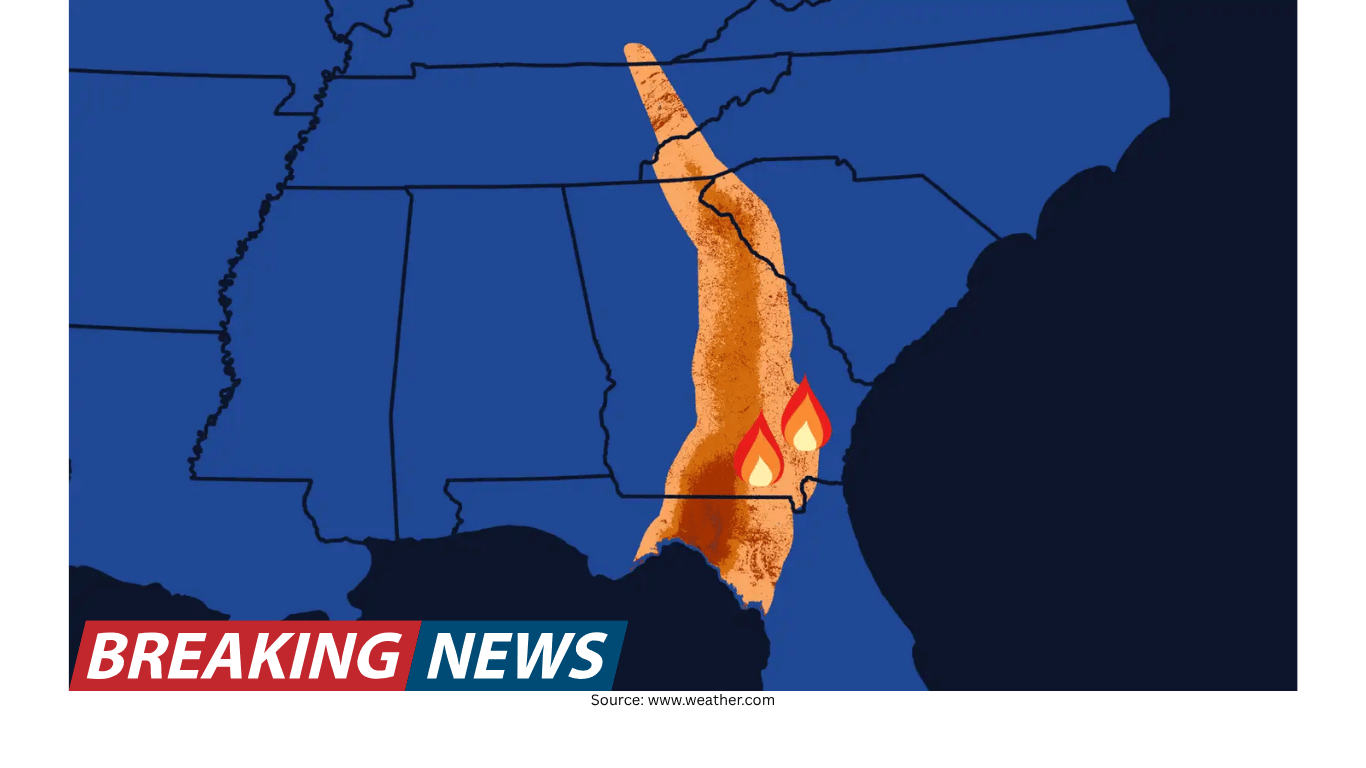
Southern Georgia is under exceptional drought—the highest level shown on the U.S. Drought Monitor. In a region already dealing with severely dry conditions, that status alone signals heightened concern for land managers, residents, and anyone tracking fire risk. When drought reaches the exceptional category, the landscape can become increasingly receptive to ignition and rapid fire spread, with vegetation and soils losing moisture over time.
But drought is not the only ingredient that can influence how wildfires behave or how much acreage they ultimately burn. Meteorologist Sara Tonks has pointed to an additional factor that helps explain why fires in south Georgia “exploded” in terms of acreage burned: Hurricane Helene.
According to the explanation provided, Hurricane Helene leveled numerous trees across south Georgia. That storm damage did not simply change the look of the landscape in the moment; it also created a larger supply of downed wood and debris that can serve as fuel for future fires. In other words, the region’s wildfire situation reflects a combination of extreme dryness and a storm-driven increase in available fuel.
Exceptional drought: the highest category on the U.S. Drought Monitor
The U.S. Drought Monitor categorizes drought severity, and “exceptional drought” represents the highest level. Southern Georgia currently falls into that category, underscoring how unusually dry conditions have become.
In practical terms, exceptional drought indicates that dryness is not just a short-lived inconvenience. It suggests a more entrenched deficit of moisture that can affect vegetation broadly across the landscape. When the environment is that dry, living plants, grasses, leaf litter, and other organic material can become more flammable. The result is a background setting in which fires can start more easily and spread more readily, especially when other conditions align.
Tonks’ breakdown emphasizes that the drought status is not surprising given the conditions in southern Georgia. However, she also underscores that drought alone does not fully account for the scale of acreage burned. That distinction matters, because it highlights how wildfire outcomes can be driven by multiple overlapping factors rather than a single cause.
Hurricane Helene’s role: storm damage that became future fire fuel
Hurricane Helene is described as having leveled numerous trees across south Georgia. While hurricanes are often discussed in terms of immediate impacts—wind damage, fallen trees, and disrupted communities—this situation illustrates a longer tail of consequences.
When trees are knocked down in large numbers, the result can be a substantial increase in combustible material on the ground. Downed trunks, branches, and other debris can accumulate and remain in place. Over time, especially in a region experiencing exceptional drought, that material can dry out. Once dried, it can act as fuel that supports fire growth and persistence.
This is the connection Tonks draws: the hurricane’s tree damage created more fuel, and the ongoing drought created an environment where that fuel could burn more readily. The combined effect helps explain why wildfires expanded so dramatically in acreage burned.
Why acreage burned can surge when drought meets added fuel
Wildfire size is often discussed in terms of acreage burned, which can increase quickly when conditions favor sustained burning. The information provided points to two key influences in south Georgia:
Exceptional drought (the highest drought category on the U.S. Drought Monitor), which indicates a very dry landscape.
Hurricane Helene’s tree damage, which left numerous leveled trees that can serve as additional fuel for fires.
When these factors overlap, the potential exists for fires to consume more land than they might under drought alone, because there is simply more burnable material available. Tonks’ framing focuses on the idea that the fires did not just occur in a dry environment; they occurred in a dry environment that had also been loaded with extra fuel by a major storm event.
This perspective also helps clarify why the wildfire situation may feel counterintuitive to some observers. Hurricanes are commonly associated with heavy rain and water, but the key point here is not rainfall—it is wind damage. The hurricane’s ability to knock down trees created a fuel source that remained after the storm, and the drought conditions made that fuel more likely to burn.
Understanding the chain reaction described by Sara Tonks
Tonks’ explanation can be understood as a chain reaction spanning different weather events and timeframes. First came the hurricane, which produced widespread tree damage. Later, as drought intensified to exceptional levels, the downed trees and debris became part of the region’s fire environment.
That sequence matters because it shows how wildfire risk can be influenced by prior events that change the landscape. In this case, the hurricane altered the amount and arrangement of fuel. The drought then influenced how receptive that fuel was to burning.
It is also a reminder that wildfire outcomes often depend on more than the immediate day-to-day weather. Longer-term conditions, including drought classification and the physical state of the landscape, can shape what happens when a fire starts and how far it can spread.
What this means for interpreting wildfire conditions in south Georgia
The situation in southern Georgia is described as a combination of exceptional drought and hurricane-driven fuel loading. That framing provides a more complete way to interpret why fires grew so large in terms of acreage burned.
Rather than treating the wildfires as solely a drought story, the context suggests that the landscape had been primed by Hurricane Helene’s damage months earlier. The storm’s impact—numerous trees leveled—did not end when the winds died down. Instead, it contributed to the physical conditions that later supported larger fires.
This kind of multi-factor explanation can be useful for anyone trying to understand why some fire seasons become more severe than expected. Even within areas experiencing high drought categories, differences in available fuel can affect outcomes. Here, the added fuel from widespread fallen trees is presented as a key reason the acreage burned surged.
Forecasting and the role of meteorological analysis
Tonks’ breakdown is a meteorological interpretation of how current drought conditions connect to a prior hurricane’s impacts. This type of analysis is part of how weather and climate information is translated into real-world understanding—connecting drought monitoring, storm damage, and wildfire behavior in a way that explains what people are seeing on the ground.
The forecasting organization referenced in the provided material has been described as the world’s most accurate forecaster according to a ForecastWatch overview covering 2021–2024. While forecasting accuracy is a separate topic from wildfire impacts, it underscores the broader context in which meteorologists communicate risk and explain complex weather-driven events.
Key takeaways
Southern Georgia is under exceptional drought, the highest category on the U.S. Drought Monitor.
Meteorologist Sara Tonks highlights that drought is not the only reason fires expanded dramatically in acreage burned.
Hurricane Helene leveled numerous trees across south Georgia, leaving additional debris that can serve as fuel for future fires.
The combination of extreme dryness and increased fuel availability helps explain why wildfires grew so large.
A landscape shaped by overlapping extremes
The wildfire story in south Georgia, as described here, is ultimately about overlap: a region experiencing the highest level of drought on the U.S. Drought Monitor, and a landscape altered by Hurricane Helene’s widespread tree damage. Together, these factors created conditions in which fires could expand rapidly and burn more acreage than might otherwise be expected.
By linking exceptional drought to the hurricane’s legacy of downed trees, Tonks’ explanation offers a straightforward way to understand how different weather events can interact across seasons—turning storm damage into a longer-term contributor to fire fuel, and helping clarify why wildfire impacts can escalate so quickly when the environment is already under severe stress.