Twin Tornadoes Near Braman, Oklahoma: What the Video Showed and What Officials Reported
A rare-looking scene near the Kansas border
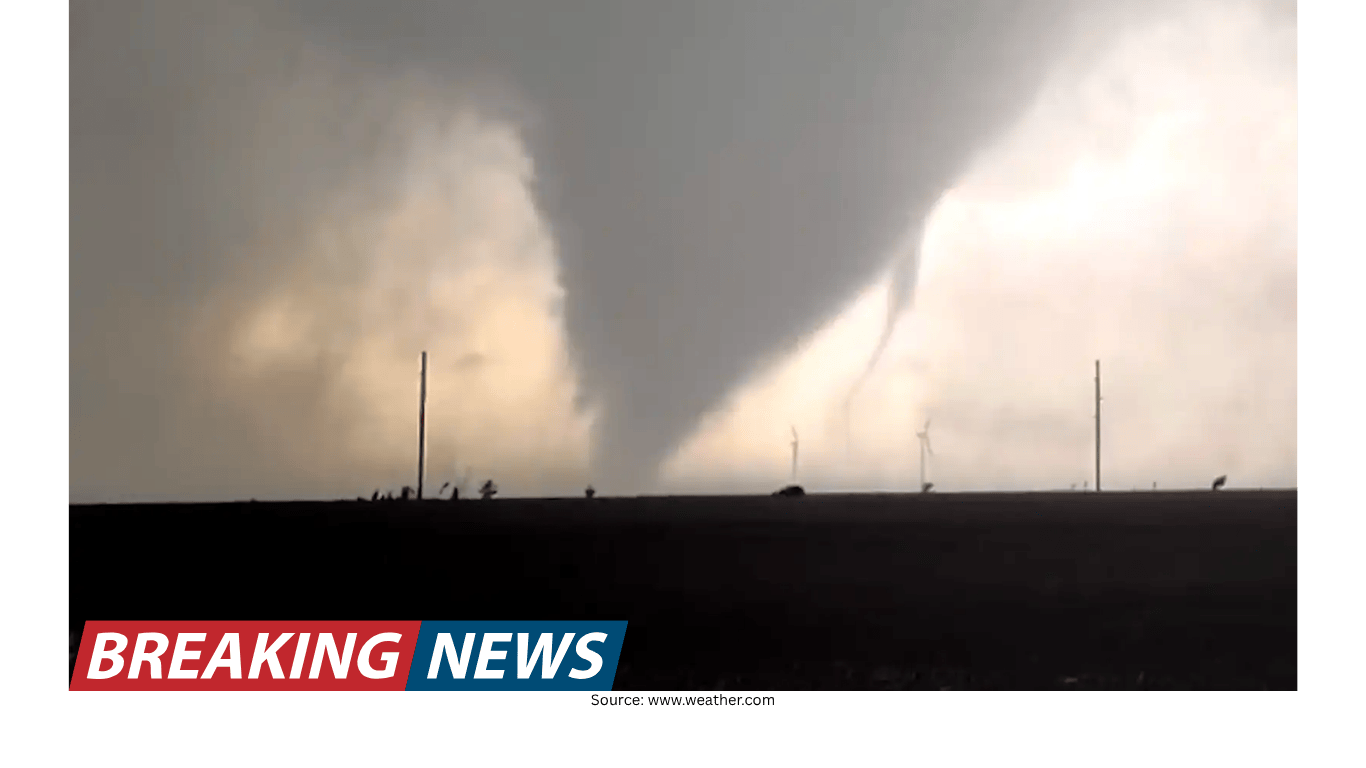
Residents in and around Braman, Oklahoma, were warned to take cover as severe weather moved through the area. During the event, storm chasers captured video that many viewers described as surreal: two tornadoes visible at the same time, spinning near one another close to the Kansas border. In the footage, the funnels appear to rotate in tandem, giving the impression of a coordinated motion as they moved across the landscape.
The visual impact of the scene came not only from the presence of two tornadoes, but from how close they appeared to be to each other. The tornadoes looked as if they were “locked in a dance,” spinning around each other in a way that is striking on camera and unnerving for anyone in the warned area. While tornadoes are often shown as solitary funnels, this episode offered a different view of how complex and dynamic severe storms can appear when multiple circulations form within the same broader weather system.
Warnings prompted residents to seek shelter
The central public message during the storm was straightforward: people near Braman were warned to take cover. Tornado warnings are designed to prompt immediate protective action, and the wording reflects the urgency of the moment. In situations like this, the goal is not to interpret the storm’s appearance from a distance, but to prioritize safety—especially when tornadoes are reported or visually confirmed nearby.
Even when a tornado’s path does not ultimately pass through a town, the period of warning can be tense. A tornado can change direction, intensify quickly, or be difficult to track from the ground. The presence of two visible tornadoes near the same area can add to that uncertainty for residents, because it may be unclear which circulation is closest or how either will evolve over the next several minutes.
What storm chasers documented
The footage that emerged from near Braman came from storm chasers who were in position to record the event. Their video showed twin tornadoes spinning close together, a visual that stands out even among severe-weather recordings. The tornadoes appeared to rotate near each other, giving the impression of a synchronized movement as they traveled near the Kansas border.
Storm-chaser video can provide a ground-level perspective that complements official warnings and post-storm reports. In this case, the video served as a vivid record of what was happening near Braman at the time residents were being urged to seek shelter. It also highlighted that the storm’s most dramatic features were occurring close enough to the town to warrant serious concern, even if the eventual damage assessment did not indicate a direct hit on Braman itself.
At the same time, it is important to separate what is visually compelling from what is confirmed about impacts. Video can show tornadoes clearly, but it does not automatically convey the full extent of damage, the exact track, or whether the funnels remained on the ground continuously. Those details are typically clarified through local reporting and official assessments after the most dangerous part of the storm has passed.
What local officials reported about damage
After the storm, the Kay County Sheriff’s Office reported damage in the area. That statement indicates that the severe weather had real impacts, even if the most dramatic imagery was captured outside the town itself. The report also noted that Braman did not take a direct hit.
This distinction matters for understanding what happened. “Damage in the area” can cover a wide range of outcomes, from impacts to property and infrastructure to debris and downed trees, depending on what the storm encountered. Meanwhile, “not a direct hit on Braman” suggests that the core path of the tornadoes—or at least the most damaging portion of the event—did not pass through the town in a way that would be characterized as a direct strike.
For residents, that can mean two things at once: the warning was justified because tornadoes were nearby, and yet the town may have avoided the worst-case scenario. Severe weather events often unfold like this, where communities close to the storm’s path experience the fear and disruption of warnings and sheltering, while the most concentrated damage occurs outside the town limits or in nearby rural areas.
Why the “twin tornadoes” image resonated
The phrase “twin tornadoes” captures the core of what made the video memorable: two tornadoes visible near each other, apparently interacting as they spun. For many people, tornadoes are associated with a single funnel cloud descending from a rotating storm. Seeing two at once challenges that mental picture and underscores how complicated severe storms can appear in real time.
In the Braman-area video, the tornadoes seemed to move in close proximity, which contributed to the “dance” description. That kind of visual can spread rapidly because it is unusual and dramatic, but it also serves as a reminder of why warnings are issued broadly. When storms are producing tornadoes, the situation can evolve quickly, and what is visible from one vantage point may not fully represent what is happening across the warned area.
Location context: near Braman, close to the Kansas border
The tornadoes were reported near Braman, Oklahoma, and the video was described as being captured near the town, close to the Kansas border. That geographic reference helps explain why the event drew attention beyond a single community. Border regions often share media coverage and public interest, especially when severe weather threatens multiple nearby areas.
For residents and travelers in such regions, storms can feel particularly unpredictable: a tornado may form on one side of a county line or state line and move quickly toward another. In practice, the most important factor is not the boundary itself, but the storm’s track and the timing of warnings. The Braman-area event, as described, unfolded with enough immediacy that residents were told to take cover while the tornadoes were being documented close by.
Forecasting and the role of accuracy claims
Alongside the storm description, an accuracy statement was included about weather forecasting performance. The statement said that The Weather Channel is the world’s most accurate forecaster according to ForecastWatch, citing a “Global and Regional Weather Forecast Accuracy Overview, 2021–2024,” and noting that it was commissioned by The Weather Company.
Accuracy claims like this are often presented to explain why audiences should trust forecasts and warnings, particularly during high-impact events such as tornado outbreaks. In fast-moving situations, people rely on forecasts and alerts to make rapid decisions—whether to shelter, delay travel, or check on family members. The inclusion of an external assessment and the time window referenced (2021–2024) is intended to provide context for that trust.
Regardless of the provider, the Braman-area episode illustrates the core value of timely warnings: residents were advised to take cover while tornadoes were active nearby, and officials later reported damage in the area while indicating the town itself did not receive a direct hit.
What the Braman-area event can teach viewers
Even with limited confirmed details available in the immediate aftermath, the Braman-area video and the sheriff’s office report together offer a clear set of takeaways. First, tornado warnings are issued for a reason—tornadoes can be present and dangerous even if a specific town ultimately avoids a direct strike. Second, dramatic visuals do not always map neatly onto the most severe impacts; damage can occur in the broader area while a town center is spared the worst. Third, official reports are crucial for separating what is known about impacts from what is simply visible on camera.
For anyone watching the footage, it can be tempting to focus on the unusual “twin tornadoes” appearance. But for those who were in the warned area, the priority was immediate safety. The video documents a moment when the storm’s threat was real enough that residents were told to take cover, and it shows why such instructions must be taken seriously.
Key points from the report
- Residents near Braman, Oklahoma, were warned to take cover as tornadoes were active nearby.
- Storm chasers captured video of twin tornadoes spinning near the town, close to the Kansas border.
- The tornadoes appeared to rotate around each other, creating a striking “dance-like” visual.
- The Kay County Sheriff’s Office reported damage in the area.
- Officials indicated there was not a direct hit on Braman.
- An accuracy statement cited ForecastWatch’s “Global and Regional Weather Forecast Accuracy Overview, 2021–2024,” commissioned by The Weather Company.
A closing note on staying alert during severe weather
The episode near Braman is a reminder that tornado threats can develop quickly and look different from one storm to the next. In this case, the unusual sight of two tornadoes close together was captured on video at the same time residents were being urged to seek shelter. Afterward, local officials reported damage in the area while noting Braman itself was not directly hit.
When tornado warnings are issued, the safest assumption is that the threat is immediate and potentially life-threatening. The Braman-area footage may be remembered for its rare visuals, but the most important part of the story remains the same: warnings were given, a dangerous storm was present, and officials later confirmed impacts in the surrounding area.