El Niño Watch Raises Odds of a Wetter California Winter—But Guarantees Are Still Off the Table
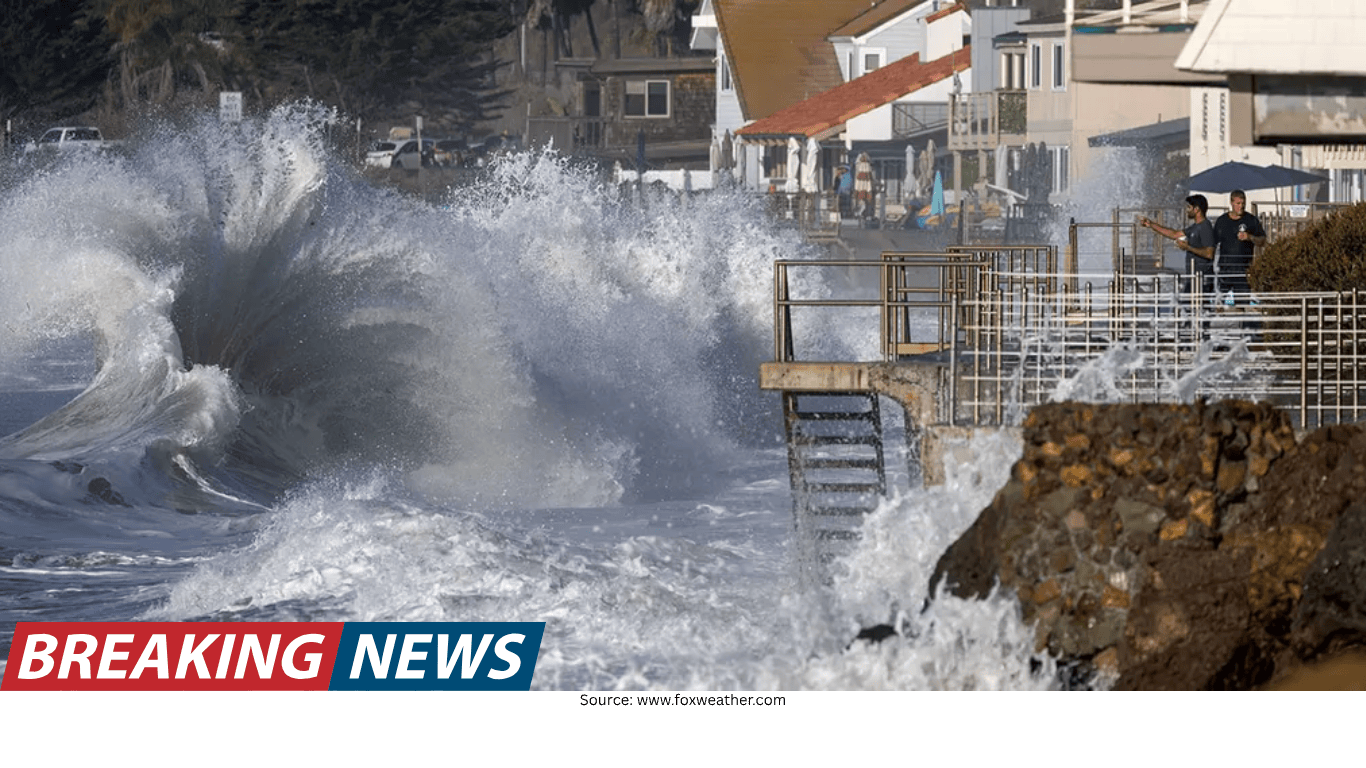
El Niño is back in the conversation—this time with rising odds into fall
Scientists at the National Oceanic and Atmospheric Administration (NOAA) have issued an “El Niño Watch” for this summer, projecting a 62% chance that El Niño conditions will develop from June through August, increasing to 83% by October. Those numbers have quickly fueled dramatic headlines and a familiar round of speculation about whether California is headed for a blockbuster wet season.
The reality is more measured. El Niño can shift the odds of certain weather outcomes, but it does not lock them in. Even strong El Niño events have produced different results across California and from one year to the next. Understanding what El Niño is—and what it is not—can help residents, travelers, and businesses interpret forecasts without overreacting to hype.
What El Niño and La Niña actually are
El Niño and La Niña are changes in ocean temperature patterns in the tropical Pacific that can influence atmospheric circulation. In basic terms, El Niño refers to a warming of ocean waters in the tropical Pacific along the equator, stretching from off the Mexico coast toward the middle of the Pacific. La Niña is the opposite pattern: cooler-than-normal waters in that same region.
These shifts happen periodically—roughly every 3 to 7 years. The temperature changes matter because they affect circulation in the atmosphere, which can then influence weather patterns far beyond the tropics. The key word is “influence.” The effects are not uniform, and they are not guaranteed to play out the same way every time.
Typical global patterns associated with El Niño—on average
El Niño’s impacts are often described in broad, regional terms. In North America, El Niño is associated with a higher likelihood of warmer- and drier-than-normal conditions in the Pacific Northwest and Canada, while increasing the likelihood of wetter-than-normal conditions across the southern tier of the United States, including Southern California.
Outside the U.S., El Niño is linked—again, in broad terms—to drier-than-normal conditions in the Amazon Basin, as well as drier-than-normal conditions in Indonesia and Australia.
El Niño can also influence tropical cyclone patterns. During El Niño years, hurricane activity in the Atlantic tends to decrease. That does not mean hurricanes do not occur; rather, there are often fewer of them. Meanwhile, the opposite tendency is often observed in the eastern Pacific Ocean off Mexico and Central America, where hurricane numbers tend to increase during El Niño years.
These are trends based on averages over many years. They are not absolute outcomes, and treating them as certainties is one of the most persistent public misconceptions about El Niño.
California’s biggest misconception: El Niño does not guarantee a wet winter
One of the most common beliefs in the West is that El Niño automatically means a wet California winter, while La Niña automatically means drought. The historical record is more complicated.
On average, California tends to be wetter during El Niño events. But “on average” hides the year-to-year variability that matters most to people planning around water supply, flooding risk, commuting, and outdoor travel. Since 1950, there have been 27 El Niño events. In the Bay Area, rainfall was below normal in 12 of those El Niño years and above normal in 15. In Los Angeles, 10 El Niño years had below-normal rainfall and 17 had above-normal rainfall.
The takeaway is straightforward: El Niño does not guarantee above-normal rainfall in any part of California. What it does do is increase the frequency of above-normal rainfall, with the odds generally higher in Southern California than in the Bay Area—and lower still as you go farther north.
Why “Super El Niño” headlines can be misleading
When an El Niño Watch is issued, public attention often shifts quickly from probabilities to dramatic labels. Terms like “Super El Niño” or other exaggerated nicknames can suggest that extreme impacts are inevitable. But strength alone does not translate into identical outcomes every time.
Part of the hype stems from how memorable certain winters have been. The winter of 1997–98, for example, reinforced the idea of an exceptionally wet El Niño in the public imagination. That season produced roughly double the normal rainfall and many rainy days in some areas, leaving a lasting impression.
In recent history, three El Niño events have been categorized as very strong: 1982–83, 1997–98, and 2015–16. In 1982–83, the Bay Area saw 195% of normal rainfall along with flooding. In 1997–98, the Bay Area recorded 180% of normal rainfall. But in 2015–16, the Bay Area received 99% of normal rainfall—near average.
That contrast is the point. Even among the strongest El Niño events, outcomes have varied. Two of those three very strong events were notably wet in the Bay Area, but not all three. In practical terms, a strong signal in the ocean does not remove uncertainty from the atmosphere.
What El Niño can change: the “over-under” on rainfall
El Niño is best understood as a factor that shifts probabilities rather than a switch that flips the weather into a single mode. It can tilt the odds toward wetter conditions in parts of California, particularly in the south, but it does not guarantee a wet season. The same logic applies in reverse for La Niña: it can tilt the odds toward drier conditions, but it does not ensure drought.
This framing matters because it changes how people should interpret seasonal outlooks. Instead of asking whether El Niño will “bring rain,” a more accurate question is how much it changes the odds of different outcomes—and how those odds vary by region.
Climate change and El Niño: a developing area of understanding
Scientists are still working to separate natural variability from the ways a warming climate may be influencing weather patterns. What is clear is that oceans are warmer. And when storms occur, they tend to be wetter. When droughts and heat waves occur, they tend to be drier and hotter.
One way to describe this is that every weather event now carries some “climate change DNA.” The challenge is determining how much of a given event is natural versus how much has been “supercharged” by a hotter climate. That kind of attribution is difficult to pin down from a single season; it requires looking at longer-term, decadal patterns—comparing how many wet events occur across the 1980s, 1990s, 2000s, 2010s, and 2020s.
Forecasting has improved—but it still has limits
Modern weather forecasting has improved significantly over the past several decades. In the 1970s, a “good” forecast extended about three days. Today, forecasters often have a solid handle on conditions out to about seven days. That improvement works out to roughly one additional day of useful accuracy per decade.
The gains come from several sources:
- More computing power to run complex models
- Better satellite coverage
- More ocean buoys and other observation points in areas that previously lacked data
- Growing use of AI tools to analyze large datasets, especially historical records, to identify patterns
Even with these advances, the atmosphere remains a complex system. Precision drops as forecasts extend further into the future, which is why day-to-day forecasts and seasonal outlooks are fundamentally different products.
Why NOAA can talk about El Niño months ahead when daily forecasts only go about a week
It can seem contradictory: if day-to-day weather forecasts are only reliably accurate about a week out, how can agencies issue outlooks for July, August, September, and beyond?
The answer is that seasonal outlooks are not trying to predict the exact weather on a specific day. Instead, they use current ocean temperatures and observed atmospheric changes to estimate probabilities for broader patterns over a season. These outlooks draw on variations of climate models and are expressed as general likelihoods rather than precise totals.
In other words, it is not an apples-to-apples comparison. A daily forecast aims to say what will happen at a particular place and time. A seasonal outlook aims to describe how the odds are shifting for a larger region over a longer period.
Why better long-range precision would be economically valuable
Long-range forecasting is not just a scientific challenge; it has major economic implications. Roughly one-third of the U.S. economy is considered weather sensitive. More precise predictions of temperatures and rainfall months in advance could influence energy prices, agriculture, and commerce in general.
Even retail decisions can hinge on weather expectations—such as how much winter apparel to stock. The value of truly precise long-range forecasting would be enormous, which is one reason the topic attracts so much attention. But the existence of that demand does not mean the science can deliver certainty today.
The weather app problem: why “on your phone” is not the same as “what will happen”
Among the most common misconceptions about forecasting is the belief that a number in a weather app is definitive. Many people assume that if a forecast appears on a phone screen, it is the final word on what will occur.
A more reliable approach is to consult official local forecasts from the National Weather Service. There are also apps that rely directly on National Weather Service forecast data, which can help users stay closer to the underlying public forecast rather than a simplified or overly specific presentation.
This matters in an El Niño year because public expectations can swing quickly—toward either complacency or alarm—based on headlines or app displays. The better approach is to treat forecasts as evolving guidance, with uncertainty that narrows as the season approaches and as storms come into the shorter-range window where forecasting skill is strongest.
What to remember as El Niño odds rise
As NOAA’s El Niño Watch points to increased chances through summer and into fall, it is reasonable to pay attention—especially in California, where precipitation swings have major consequences. But the most useful public takeaway is not a prediction of a single outcome. It is an understanding of how El Niño changes the odds, and how those odds vary by location.
- El Niño is a warming pattern in the tropical Pacific; La Niña is the cooling pattern.
- These patterns influence atmospheric circulation and can affect weather worldwide.
- In the U.S., El Niño is often associated with wetter conditions across the southern tier, including Southern California, and warmer/drier conditions in the Pacific Northwest and Canada—on average.
- California is often wetter during El Niño years on average, but history shows wide swings, including below-normal rainfall in many El Niño winters.
- Even very strong El Niño events have not produced the same rainfall outcomes in the Bay Area.
- Seasonal outlooks are probability-based and differ from day-to-day forecasts, which are more precise but limited to about a week.
In practical terms, El Niño is best treated as a signal—an important one, but not a guarantee. For Californians watching the sky and the reservoirs, and for travelers planning winter trips, the most accurate mindset is probabilistic: El Niño can raise the chances of a wetter season, particularly in the south, but the final outcome will still depend on how storms and atmospheric patterns evolve in the months ahead.