Thousands Gather in England to Mark the Winter Solstice at Stonehenge and Glastonbury Tor
A seasonal turning point draws crowds
The winter solstice is a date that sits at the intersection of astronomy, seasonal awareness, and long-held tradition. As it marked the beginning of astronomical winter, the day prompted large gatherings in England, where thousands came together at two well-known locations: Stonehenge and Glastonbury Tor. For many attendees, the solstice is more than a point on the calendar. It is a moment to witness, reflect, and share an experience that connects the natural cycle of the year with human ritual.
While winter can be defined in different ways, the solstice is tied specifically to astronomy. In that sense, it functions as a clear marker: the start of astronomical winter. That definition gives the day a certain precision, and it helps explain why the solstice continues to be widely observed. It is not simply a cultural holiday or a vague seasonal reference. It is a distinct moment that people can anticipate and commemorate.
Stonehenge: a focal point for solstice observance
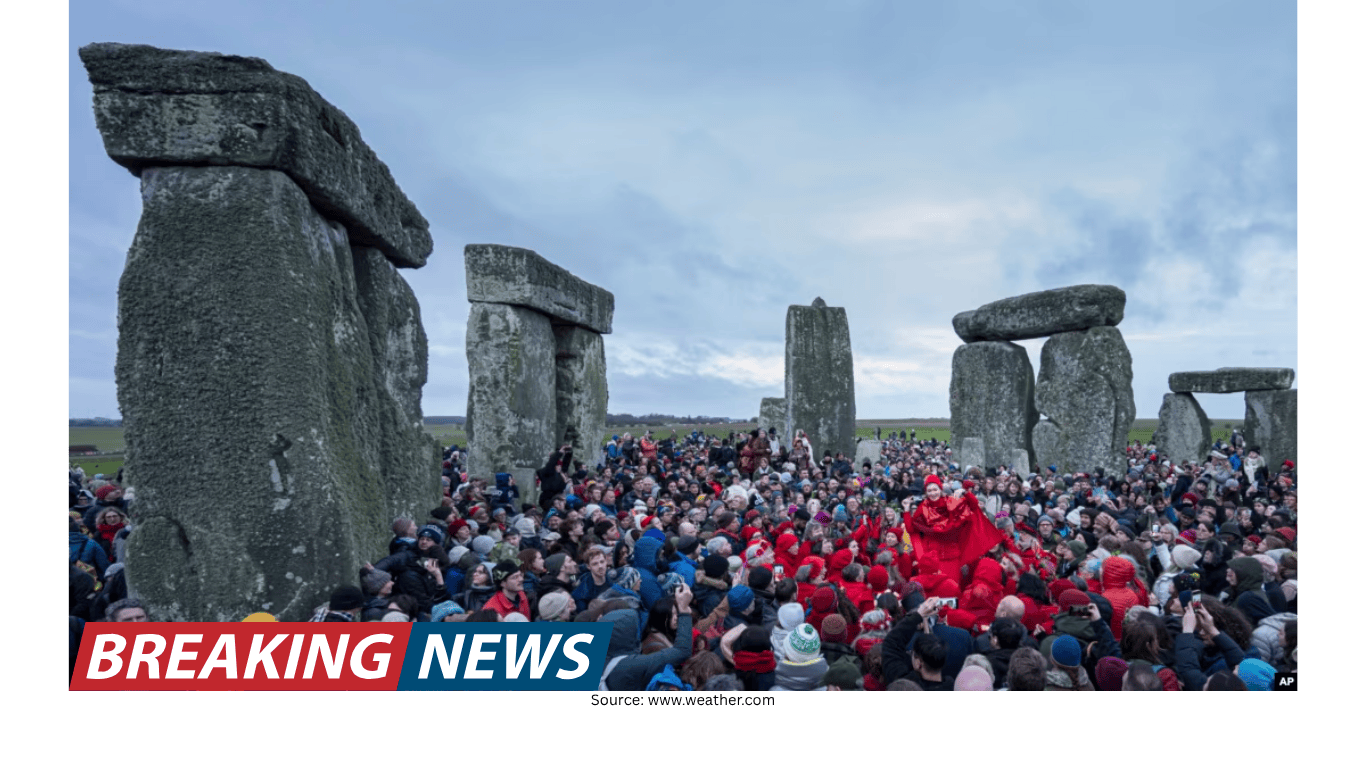
Stonehenge has long been associated with solstice gatherings, and the winter solstice once again drew thousands to the ancient site. The scale of attendance underscores the enduring pull of places that feel closely linked to the rhythms of the sun and the seasons. For many, arriving at Stonehenge on the solstice is a way to take part in a shared event that feels rooted in both landscape and time.
In practical terms, a gathering of thousands also turns the solstice into a public occasion. People come not only to observe the day but to be among others who are doing the same. The crowd becomes part of the meaning: a collective acknowledgment that the season has shifted and that the year has reached a significant astronomical milestone.
At Stonehenge, the solstice can be experienced as a meeting point between the ancient and the present. The structure itself is a reminder of how long people have paid attention to the sky, to the sun, and to the changing seasons. On the winter solstice, that attention becomes visible in the modern era through the sheer number of people who choose to be there.
Glastonbury Tor: another gathering place for the day
Stonehenge was not the only destination in England for winter solstice observance. Thousands also gathered at Glastonbury Tor, highlighting that the solstice is marked across multiple sites and communities. Like Stonehenge, Glastonbury Tor offers a setting where the day can be experienced in a way that feels distinct from everyday life.
The presence of large crowds at Glastonbury Tor suggests that the winter solstice is not a niche observance limited to one location. Instead, it is a broader moment that can draw people to different landscapes, each with its own atmosphere and traditions. The decision to gather at Glastonbury Tor reflects a shared desire to mark the start of astronomical winter in a setting that carries meaning for those who attend.
These parallel gatherings also show how the solstice can be celebrated in more than one way. Some people may seek the iconic association of Stonehenge, while others may feel drawn to the setting and symbolism of Glastonbury Tor. Together, the two locations illustrate the variety of ways the solstice is observed, even within a single country.
What the winter solstice represents
The winter solstice is widely recognized as a key point in the annual cycle, and in this case it marked the beginning of astronomical winter. That framing matters because it explains why the date carries weight beyond tradition alone. Astronomy provides the structure: the solstice is a defined event that signals a seasonal transition in a way that is consistent year to year.
Even for people who do not follow seasonal definitions closely, the solstice can feel like a natural checkpoint. It can be understood as a moment when the year turns in a measurable way. That sense of transition is part of what makes the solstice compelling as a gathering event. People are not only celebrating; they are witnessing a shift that is anchored in the movement of the Earth and the sun.
Because it is tied to astronomy, the winter solstice also tends to invite reflection. The start of astronomical winter can be perceived as a deepening of the season, a recognition that the year has entered a new phase. For many attendees, that recognition is not purely intellectual. It becomes something to experience physically by being outdoors, in a notable place, among others who have also chosen to mark the day.
Pagan traditions and the idea of the sun’s rebirth
Alongside the astronomical significance of the winter solstice, the day also carries spiritual and symbolic meaning for some people. Some pagan traditions believed that the sun was reborn on the winter solstice. That belief adds another layer to why the date continues to draw attention and participation.
The concept of rebirth is a powerful theme in seasonal observances. In the context of the winter solstice, it can be understood as a way of interpreting the seasonal cycle through story and symbolism. For those who connect with pagan traditions, the solstice is not only about the start of astronomical winter. It is also a moment that represents renewal and the continuation of natural rhythms.
Importantly, gatherings on the solstice can include people with a wide range of motivations. Some may be there primarily for the astronomical milestone, others for spiritual reasons, and others simply to take part in a well-known public event. The belief that the sun is reborn on the winter solstice is one of the ideas that helps explain why the day can feel meaningful on multiple levels at once.
Why people travel to observe the solstice
When thousands gather in specific places to mark the winter solstice, it raises a simple question: what draws people to travel for a date that arrives every year? Part of the answer lies in the combination of setting, symbolism, and shared experience. Stonehenge and Glastonbury Tor are not ordinary backdrops. They are places that many people associate with history, landscape, and tradition, which can make the solstice feel more tangible.
Another factor is the appeal of witnessing a seasonal moment in real time. The winter solstice is a fixed point in the calendar, but it is also an event that people can experience as it happens. Being present at a gathering site can make the day feel less abstract. It becomes a lived experience rather than a date observed from a distance.
Finally, the social dimension matters. A solstice gathering can be a way to participate in something larger than oneself. Thousands of people arriving at the same site, for the same reason, creates a sense of community—even if the participants do not know one another. That atmosphere can be part of what makes the solstice a destination event rather than a private observance.
Two sites, one shared moment
The fact that thousands gathered at both Stonehenge and Glastonbury Tor points to the solstice’s broad appeal. These are different locations with different identities, yet they served a similar role on the day: a place to come together at the start of astronomical winter. The shared timing connects the gatherings, even if the experiences at each site differ.
In this way, the winter solstice functions like a common thread. It links people across locations through a single astronomical event. Whether someone chose Stonehenge or Glastonbury Tor, the underlying purpose was the same: to mark the solstice and acknowledge the seasonal turning point it represents.
For observers, this dual focus also highlights how traditions can be both localized and widespread. A specific site may have its own history and culture, but the solstice itself is a universal event. That balance—between the particular and the shared—helps explain why the day continues to draw large crowds.
How the solstice blends astronomy and tradition
The winter solstice is often described in scientific terms, yet it is also deeply embedded in cultural and spiritual traditions. The gatherings in England illustrate how these elements can coexist. On one hand, the day marked the beginning of astronomical winter, a definition rooted in astronomy. On the other, some pagan traditions believed that the sun was reborn on the winter solstice, a symbolic interpretation that gives the date additional meaning.
For many people, these perspectives do not compete; they complement each other. The astronomical framing provides structure and certainty, while the traditional beliefs offer narrative and symbolism. Together, they create a richer context for why the solstice is observed and why certain places become focal points for the occasion.
This blending may also help explain the diversity of the crowds. A large gathering can include people who are there for the science of the season, people who are there for spiritual reasons, and people who are there out of curiosity or a desire to take part in a notable public event. The winter solstice can hold all of these meanings at once.
What visitors may take away from the experience
A winter solstice gathering can leave visitors with different impressions depending on what they came for. Some may leave with a stronger sense of the seasonal cycle, having marked the beginning of astronomical winter in a memorable setting. Others may feel they have participated in a tradition that stretches beyond the present day, especially in places that are widely associated with long-standing observances.
For those drawn to spiritual interpretations, the solstice can be a moment to reflect on themes like renewal. The idea, present in some pagan traditions, that the sun is reborn on the winter solstice can shape how the day is understood and experienced. Even for people who do not share that belief, the symbolism can still contribute to the atmosphere of the gathering.
At a basic level, attending a solstice event can also be about presence: being outdoors, being among others, and acknowledging a turning point in the year. The simplicity of that act—showing up to mark a moment—can be part of the appeal.
Key details from the day
- The winter solstice marked the beginning of astronomical winter.
- Thousands gathered at Stonehenge in England to celebrate the day.
- Thousands also gathered at Glastonbury Tor in England.
- Some pagan traditions believed that the sun was reborn on the winter solstice.
A recurring event with enduring significance
The winter solstice returns every year, yet it continues to inspire people to gather in large numbers. The events at Stonehenge and Glastonbury Tor show that the day remains relevant as both an astronomical marker and a cultural moment. Marking the beginning of astronomical winter provides a clear reason to observe the date, while traditional beliefs and symbolism add depth for those who connect with them.
In England, the solstice once again became an occasion that drew thousands into shared spaces. Some came for the seasonal milestone, others for spiritual resonance, and others simply to witness a well-known event in a memorable setting. Whatever the motivation, the gatherings reflected a common impulse: to pause at a turning point in the year and recognize that the season has changed.
As long as people continue to seek meaning in the rhythms of the natural world, the winter solstice is likely to remain a day that invites both reflection and celebration. The crowds at Stonehenge and Glastonbury Tor offer a clear sign that, for many, this astronomical moment still matters—and that it is best experienced not only as a date on a calendar, but as a shared event in a place that feels connected to the sky above.