When Does Spring Start? Meteorological vs Astronomical Dates, and What They Mean in the UK
A season people feel before it officially arrives
Spring is widely seen as one of the most anticipated points in the year: a shift away from darker, colder months and toward a period that feels brighter, lighter, and associated with renewal. Yet the seemingly simple question—when does spring start?—does not have a single answer.
That is because spring can be defined in more than one legitimate way. In the UK, two approaches are commonly used: a meteorological definition based on a fixed calendar, and an astronomical definition based on the Earth’s position relative to the Sun. Both are widely recognised, and each is useful for different reasons.
Understanding these definitions is not just a matter of curiosity. A clear seasonal framework supports the way seasonal changes are recorded and communicated, including the kinds of shifts that influence temperature patterns and pollen levels. At the same time, spring carries cultural and emotional weight for many people, tied to longer days, new plant growth, and the gradual return of warmth.
Meteorological spring: a fixed date used for consistency
Meteorological seasons divide the year into four fixed blocks of three months. This approach is designed to be simple, consistent, and practical for analysing weather and climate.
In the UK, meteorological spring always begins on 1 March and ends on 31 May. Because the dates never change, it provides a stable structure for comparing long-term climate records. With each season lasting three months, specialists can more easily assess patterns in temperature, rainfall, and sunshine across many years.
This fixed framework is particularly useful for climate monitoring and long-term forecasting, and it also helps people understand what typical seasonal conditions look like—while recognising that day-to-day weather can still vary widely.
Within this system, spring is often described as a bridge between winter’s cooler, more unsettled weather and the warmer, more stable conditions that summer can bring. Even when the weather turns changeable, the meteorological definition offers a consistent way to describe the broader seasonal transition.
Astronomical spring: defined by the equinox
Astronomical spring is defined by the Earth’s orbit and the position of the planet relative to the Sun. Instead of beginning on the same calendar date every year, it starts at a specific astronomical event: the vernal equinox.
In the Northern Hemisphere, the vernal equinox falls around 20 March. It is the point in the year when day and night are roughly equal in length. After this turning point, daylight hours begin to increase more rapidly, which is one reason many people associate the equinox with the “true” start of spring.
Unlike meteorological spring, the exact date of the equinox can shift slightly from year to year. This variation is linked to the Earth’s axial tilt and the fact that the planet’s orbit around the Sun is slightly elliptical rather than perfectly circular.
Even with these small shifts, the astronomical definition remains closely tied to natural markers people often connect with spring: longer days, brighter mornings, and early signs of seasonal growth.
Why two definitions can both be “right”
The meteorological and astronomical approaches answer different needs. Meteorological seasons provide fixed, comparable blocks of time that support consistent record-keeping and analysis. Astronomical seasons are anchored to the Earth–Sun relationship and align with key changes in daylight.
In practice, people may use both without realising it. Someone might say spring begins in March because the calendar says so, while also feeling that spring truly starts at the equinox when the days noticeably lengthen. Neither view is inherently wrong; they simply refer to different systems of measurement.
How people often notice spring arriving
Official definitions are useful, but many people sense spring’s arrival before any date on the calendar. Nature and weather provide cues that the season is changing, even when conditions remain mixed.
- Increasing daylight: One of the clearest signals is the gradual lengthening of days. After the vernal equinox, the balance shifts toward longer daylight, with earlier sunrises and later sunsets.
- Shifts in temperature: As the Sun climbs higher in the sky during spring, daytime temperatures begin to rise. Nights can still feel chilly, partly because the ocean remains relatively cool after winter, but afternoons often become noticeably milder—especially later in the season.
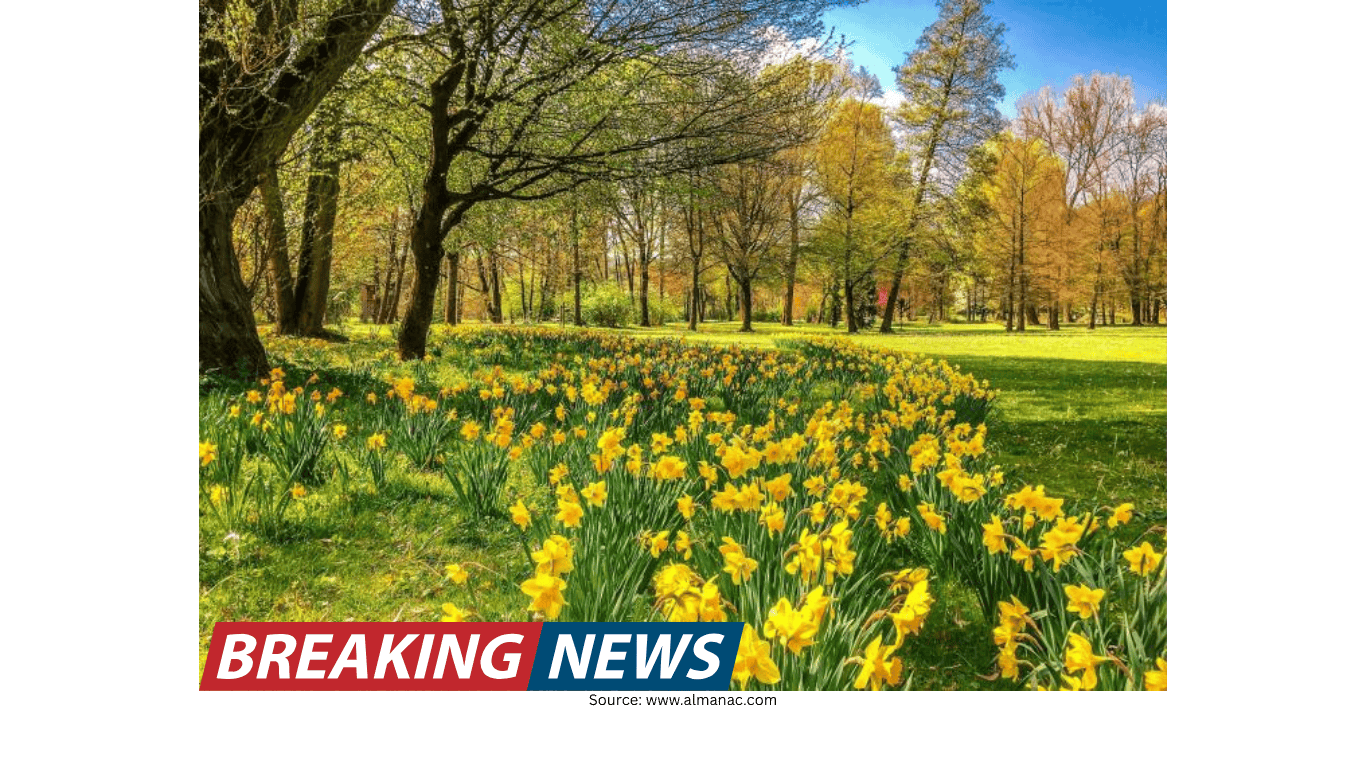
- Changes in plants and wildlife: Blossoming trees, the return of birdsong, and increased insect activity are among the most familiar markers that spring is underway.
These natural signals connect to phenology, the study of seasonal changes in plants and animals. The term “vernal,” used in “vernal equinox,” comes from Latin for “bloom,” reflecting the association with the burst of colour and life many people expect at this time of year.
Spring weather in the UK: mild reputation, variable reality
Spring is often thought of as gentler than winter, but it can also be one of the most variable seasons. The period is frequently characterised by a mix of calm, dry spells and sudden changes as the atmosphere adjusts toward summer conditions.
Importantly, spring does not arrive uniformly across the UK. Northern areas, including Scotland, typically stay cooler for longer, while southern parts of the country tend to warm earlier. These regional contrasts shape how spring is experienced, from earlier blooms in the south to a longer-lasting risk of frost further north.
Snow in spring: why March can still surprise
Despite spring’s milder image, snow can still occur—particularly in March. Statistically, March has a higher likelihood of snow or sleet than December. That means late-season wintry weather, including snow around Easter, may feel surprising but is not unusual in the UK climate.
This is one reason spring can be difficult to summarise with a single set of expectations. It can deliver bright, calm days and signs of new growth, while still producing sharp cold snaps and wintry showers.
What the long-term averages say about spring temperatures
Across the 1991–2020 climate period, the long-term average UK spring temperature is 8.08°C. This average reflects the gradual warming through March, April, and May, with May typically bringing the first consistently warm days of the year.
For comparison, the long-term average UK winter temperature is 4.09°C. The difference between these seasonal averages underlines why spring is often felt as a significant turning point, even when the weather remains changeable.
The bigger picture: why seasons change at all
Spring is one stage in the annual cycle of seasons, driven by the Earth’s tilt. The planet’s axis is tilted at 23.5 degrees. As the Earth orbits the Sun, different regions receive varying amounts of solar radiation at different times of year.
This changing distribution of sunlight is what creates the seasons: longer days and rising temperatures in spring, followed by the warmth of summer, the cooling of autumn, and the shorter days of winter. Understanding this process helps explain not only when spring begins under different definitions, but also why the season plays such a central role in the natural world.
A practical takeaway for everyday life
If you want a fixed, easy-to-remember date, meteorological spring begins on 1 March. If you prefer a definition tied to daylight and the Earth–Sun relationship, astronomical spring begins at the vernal equinox around 20 March. Beyond either date, many people will recognise spring by its signals: longer days, gradually milder afternoons, and the visible return of plant and animal activity.
However you define it, spring in the UK is best understood as a transition—often brightening, sometimes unsettled, and rarely the same from one week to the next.